
Reducing food waste is less about becoming perfectly organised and more about giving food a clear route from the shop to the plate. Buy an amount that suits the week you are actually having, store it in the right place, keep short-life food visible and freeze anything you will not use in time.
The key is to separate quality from safety. Some food can still be eaten after a best-before date if it has been stored correctly and still looks, smells and tastes as expected. A use-by date is different: it is a safety limit and should not be ignored.
Why food gets wasted — and how to stop it
Food often goes to waste because plans change, portions are too large or groceries disappear behind newer purchases. WRAP’s UK household food-waste research identifies food not being used in time and preparing or serving too much as major reasons for household waste. More recent research also points to difficulty judging quantities and “displaced meals” — the meal you planned is abandoned because you work late, go out or order something else.
That means waste is not always caused by a lack of effort. A rigid plan can fail as easily as no plan at all. The answer is a short routine that leaves room for real life:
- Check before shopping. Look through the fridge, freezer, cupboards, bread bin and fruit bowl. Build one or two meals around what needs using.
- Buy usable quantities. Write “four apples” rather than “apples”. A larger pack with a lower unit price is not better value if part of it ends up in the bin.
- Give short-life food a job. Decide which meal will use the salad leaves, fresh fish or soft fruit. Use those foods early and keep longer-life ingredients for later.
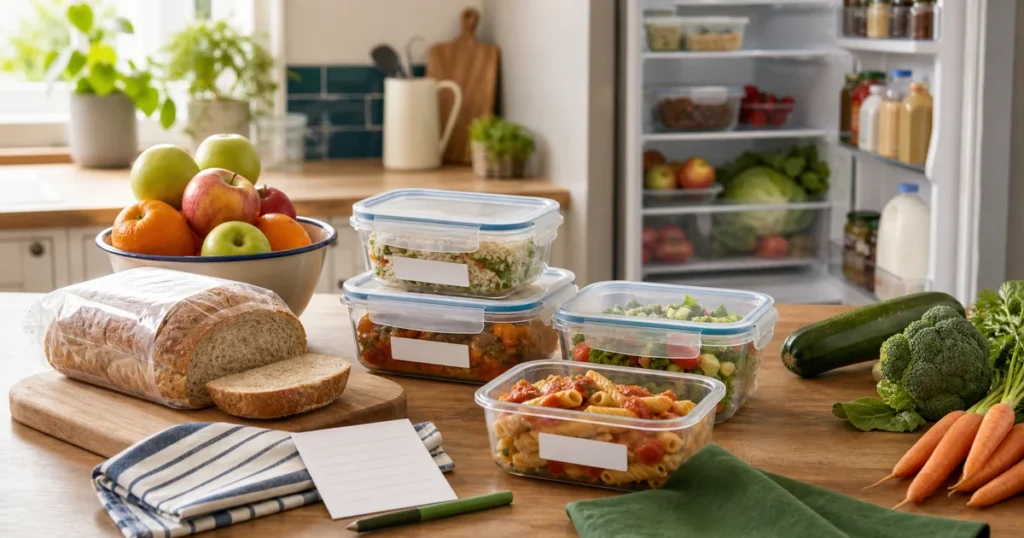
- Create an eat-first area. Put open packs, leftovers and food nearing its date together at eye level. A transparent container is far more persuasive than a mystery parcel in foil.
- Freeze early. If the second half of a loaf, pack of meat or cooked meal has no realistic place in the next day or two, freeze it while it is still good. Label the container with the food and date.
- Review what was left. Before the next shop, note what was wasted and why. Buy less, choose a different size or plan that ingredient into more than one meal next time.
If you want a wider shopping routine, Steadsense’s guide to saving money on groceries explains how to plan a usable basket and avoid false economies. The aim is not zero waste at any cost. Inedible peel, shells and bones are different from avoidable waste, and food safety always comes first.
Use-by and best-before dates are not the same
The Food Standards Agency’s date-label guidance explains that a use-by date is about safety. It appears on perishable food such as some meat products and ready-to-eat salads. You can use the food up to midnight on the date if it has been stored according to the label, but you should not eat, cook or freeze it afterwards — even if it looks and smells normal. The bacteria that can make you ill are not always detectable by sight or smell.
If you will not use something in time, cook or freeze it on or before the use-by date. Cooking it by the deadline can give you a little more time: cool it promptly, refrigerate it and eat it within 48 hours, or freeze it. Follow any shorter after-opening instruction on the pack.
A best-before date is about quality, not safety. It tells you when the maker expects the food to retain qualities such as flavour or texture. Correctly stored dried pasta, rice, tins, frozen food, biscuits and other best-before products may still be safe after the date, although they may not be at their best.
So, can you eat food after its best-before date? Often, yes. Check that the packaging is intact and the food was stored as instructed, then look for mould, rot, unusual texture or an unexpected smell. For appropriate foods, taste a small amount if the other checks are satisfactory. Do not use this “sniff test” on food with a use-by date; the date remains the safety boundary.
Make food last longer with better fridge and freezer habits
The Food Standards Agency advises setting your fridge between 0°C and 5°C and check it with a fridge thermometer if possible. Do not pack it so tightly that cold air cannot circulate. Put chilled groceries away promptly and follow the storage instructions on the pack.
A few habits make the available space work harder:
- Keep raw meat and fish covered at the bottom of the fridge, separate from ready-to-eat food, so drips cannot fall onto other items.
- Cover opened food and transfer leftovers to clean, shallow containers. Smaller portions cool faster and make it easier to defrost only what you need.
- Add a removable label with the contents and date. “Tuesday chilli” is much more likely to become lunch than “brown thing in tub”.
- Rotate groceries when you put a shop away: older food moves forwards; newer food goes behind it.
- Keep bread in a cool, dry cupboard and close the wrapper. Refrigerating bread makes it go stale faster; freeze slices instead if you will not finish the loaf.
- Freeze food before its use-by date, not after. If the package says the product was previously frozen, check whether it is suitable for refreezing.
Freezing pauses deterioration rather than restoring freshness. Freeze food while you would still be happy to eat it, use suitable sealed packaging and write a date on it. A simple freezer list on your phone or cupboard door also stops useful food becoming an archaeological discovery.
How to store fruit
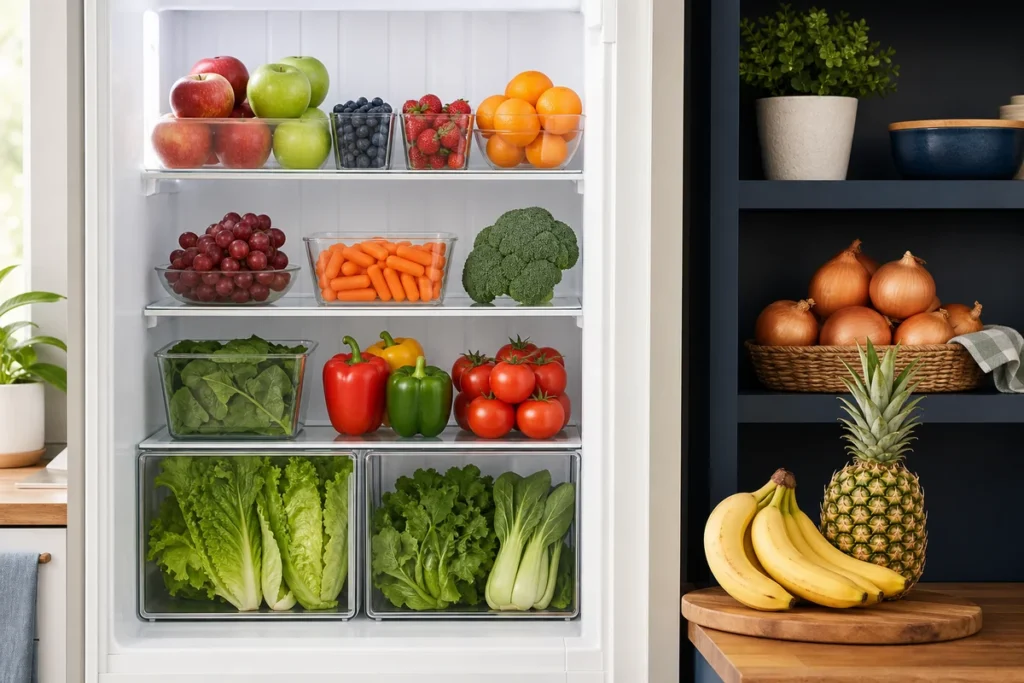
Love Food Hate Waste’s storage guidance says most fresh fruit lasts longer in the fridge, including apples, berries, grapes and citrus fruit. Tomatoes also keep for longer when chilled; you can bring them to room temperature before eating if you prefer the flavour that way. Keep fruit dry, remove damaged pieces promptly and avoid washing berries until you are ready to use them, unless their packaging tells you otherwise.
The main room-temperature exceptions are bananas and whole pineapples. Keep them somewhere cool away from direct sunlight. Bananas release ripening gases, so separating them from other fruit can slow the rest of the bowl. Once fruit is cut, cover it and refrigerate it.
Soft or overripe does not automatically mean useless. Use ripe bananas in porridge, pancakes or baking; blend soft berries into a smoothie or compote; stew wrinkled apples or pears. Mould or rot is different. If you are unsure whether deterioration is safe to trim away, the cautious option is to discard the affected food.
How to store vegetables
Most vegetables also keep longer in the fridge. Use the salad drawer for leafy greens, carrots, broccoli, peppers, courgettes and similar produce. Keep them dry enough to avoid sliminess but protected from drying out: the original pack, a reusable container or a loosely closed bag can help, depending on the vegetable.
Remove tight bands from herbs and leafy vegetables, and take off damaged leaves before they affect the rest. If carrots or celery begin to soften without showing mould or rot, they can still work well in soup, sauce or a cooked dish.
Dry onions are an exception: store them in a cool, dry, dark, ventilated place rather than the fridge. Keep potatoes cool, dark and dry too, but separate from onions because storing them together can shorten their useful life. Spring onions belong in the fridge.
Buy loose vegetables when it lets you choose a realistic number. A bag is only convenient if you can use it. For larger packs, plan one fresh use and one cooked use — perhaps peppers in wraps first, then the remaining peppers in a pasta sauce.
Which foods should you use first?
The foods that go off quickest are generally moist, perishable and ready to eat: fresh meat and fish, opened dairy products, prepared salads, cut fruit, berries and cooked leftovers. Their exact life varies, so use the label and storage instructions rather than a universal number. Put food with the earliest use-by date at the front and plan it into the next suitable meal.
No food should “never” be wasted if eating it would be unsafe. A more useful rule is to prioritise edible food that is expensive, short-lived or commonly wasted:
- Meat and fish: costly and associated with a high environmental impact when wasted; portion and freeze early.
- Cooked meals: they contain the money, ingredients and time already spent making them.
- Bread: freeze slices or ends and use them for toast, breadcrumbs or croutons.
- Milk and dairy: choose a usable pack size and freeze suitable products before they spoil.
- Potatoes and other vegetables: plan flexible cooked uses before they deteriorate.
WRAP tracks bread, milk, chicken and potatoes as four key household products and reports that potatoes, cooked meals and bread are prominent in avoidable UK food waste. If these items regularly appear in your bin, changing just one purchase size or storage habit may do more than collecting dozens of complicated food-saving tips.
Turn leftovers into another meal safely
Leftovers are easiest to use when they are treated as a ready-made ingredient, not an obligation to repeat exactly the same dinner. Refrigerate them in portions, write down what they are and decide whether they are tomorrow’s lunch, part of another meal or going straight into the freezer.
Useful patterns include:
- roast vegetables in a frittata, soup, pasta sauce or grain bowl
- cooked meat in sandwiches, wraps, fried rice or a pie filling
- beans or lentils folded into soup, chilli or a tomato sauce
- cooked potatoes turned into hash, fishcakes or a Spanish-style omelette
- stale bread made into breadcrumbs, croutons or bread-and-butter pudding
- small amounts of cheese, herbs or vegetables used in an “eat-first” omelette
- ripe fruit cooked into porridge topping, crumble, compote or smoothies
The combination does not need a formal recipe. Choose a base such as pasta, rice, potatoes, eggs or bread; add the leftover; then use a sauce, stock or seasoning to make it feel intentional. Keep allergen needs and any original storage instructions in mind.
Safety sets the timetable. Cool cooked food, cover it and put it in the fridge or freezer within one to two hours. Eat ordinary refrigerated leftovers within 48 hours or freeze them. Reheat only once and make sure the food is steaming hot throughout.
Cooked rice needs extra care: cool it as quickly as possible, ideally within one hour, keep it in the fridge for no more than one day and reheat it no more than once. Do not combine old and new leftovers in one container if that makes the safe date unclear; the earliest deadline still applies.
You do not need a perfect zero-waste kitchen. Start with one shelf for food that needs using, a fridge thermometer and a habit of freezing earlier. Those three changes make groceries easier to see, safer to manage and much more likely to become meals instead of waste.