
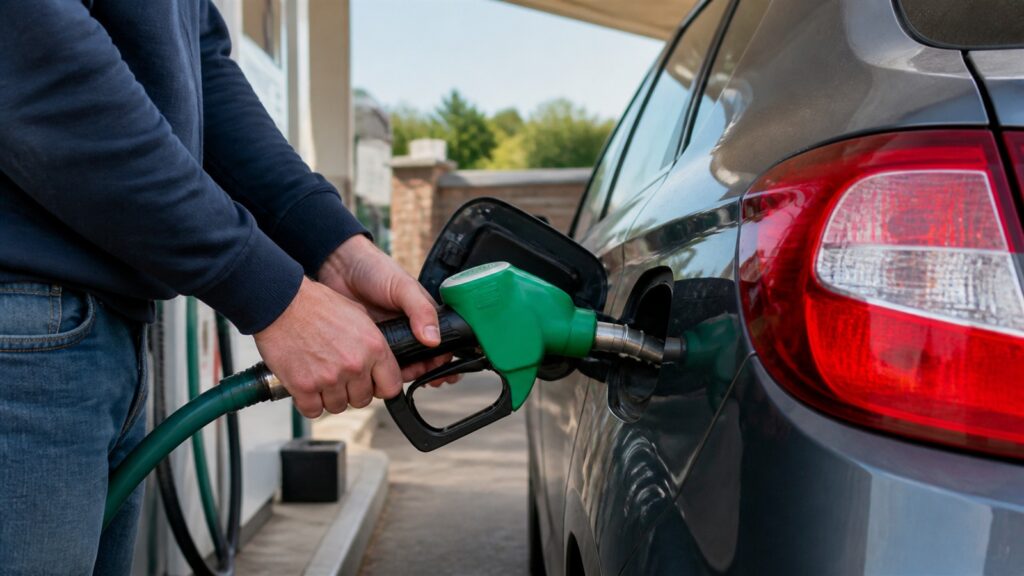
The average UK petrol price has reached 161.6p a litre, its highest level since November 2022, while diesel now averages 183.4p.
At those prices, filling a 55-litre family car costs about £88.88 with petrol or £100.87 with diesel. The petrol figure is nearly £6 more than at the early-July low, while the same diesel fill has risen by just over £10.
The figures are national averages, so the amount shown at your local forecourt may be higher or lower. New government-backed price data also makes it easier to compare nearby stations before setting off.
A 55-litre petrol fill now costs almost £89
The AA said petrol averaged 150.7p a litre at its early-July low and diesel averaged 164.8p. The latest figures represent increases of 10.9p for petrol and 18.6p for diesel.
For a 55-litre tank, that change adds approximately:
- £6 for petrol, taking the average full-tank cost to £88.88.
- £10.23 for diesel, taking the average full-tank cost to £100.87.
A smaller 40-litre fill costs about £64.64 at the petrol average or £73.36 at the diesel average.
These calculations show the change in the pump price rather than the extra cost of driving. What you actually spend still depends on your car, mileage, fuel economy and the forecourts you use.
Why UK petrol and diesel prices have risen
Fuel prices began climbing after the conflict in the Middle East started on 28 February 2026. Disruption and uncertainty in oil markets pushed up the cost of crude oil and refined fuels, which then fed through to UK forecourts.
The RAC explains that pump prices are affected by several moving parts: the global oil price, refinery capacity, the pound-to-dollar exchange rate, distribution costs and retailer margins. Fuel duty and VAT are also included in the amount paid at the pump.
Prices briefly eased after a ceasefire announcement, but renewed conflict sent oil and wholesale fuel costs higher again. On 31 July, the RAC reported petrol at 160p a litre; the latest AA figure is higher at 161.6p.
The CMA is still concerned about weak competition
The Competition and Markets Authority found that higher wholesale costs explained most of the sharp pump-price rise earlier in the conflict. It said it had not found evidence that retailers actively changed their pricing strategies to take advantage of the crisis.
However, the regulator remains concerned that weak competition and passive pricing are keeping fuel margins historically high. Its August update also found that some retailers did not immediately pass lower wholesale diesel costs on to drivers in June.
The CMA plans further analysis in the autumn, including how quickly wholesale changes reach pump prices and why prices vary between local areas.
Compare nearby forecourts before filling up
The government’s Fuel Finder scheme collects live prices and forecourt information from across the UK. Drivers can view that data through participating comparison apps and websites, including RAC Fuel Watch and other fuel-price services.
A difference of 5p a litre saves £2.75 on a 55-litre fill, while a 10p difference saves £5.50. Factor in any extra distance needed to reach a cheaper station, as a long detour can reduce the saving.
The CMA said in August that around 97% of UK petrol stations were registered with Fuel Finder, accounting for an estimated 99% of fuel sold. Most registered forecourts had supplied a price update within the previous week.