
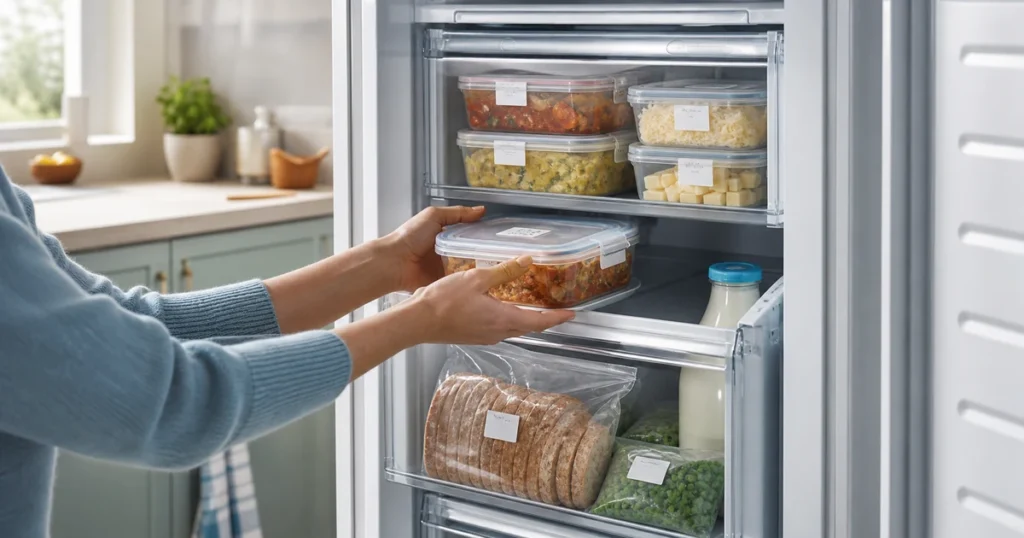
Most everyday food can be frozen, including cooked meals, milk, eggs, cheese, bread and butter. The reliable method is to freeze it while it is still fresh and safe, divide it into portions, seal it against cold air and add a label with the contents and date. Keep the freezer around -18°C and follow any instructions on the pack. The Food Standards Agency’s freezing guidance covers the core safety routine.
Freezing works like a pause button for bacterial growth; it does not reset old food or guarantee that texture will stay unchanged. What matters is the full routine: freeze promptly, defrost safely in the fridge and use the food within 24 hours of it fully thawing.
The best way to freeze food
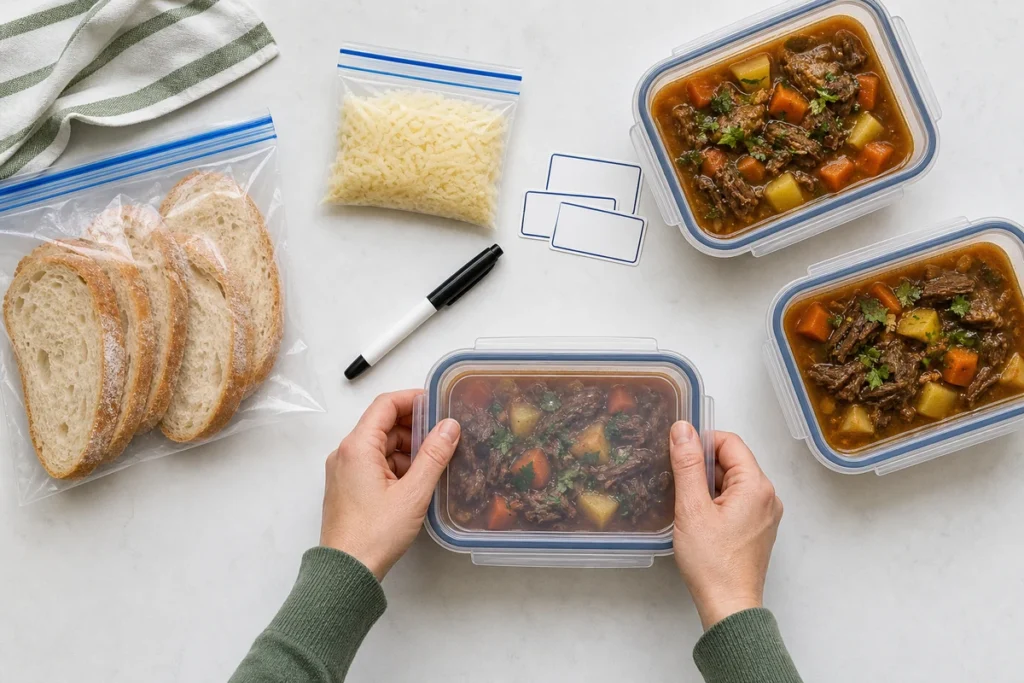
A good freezer routine protects both safety and quality:
- Check that the food is suitable. Follow the pack if it says to freeze by a certain date, cook from frozen or avoid home freezing. Food with a use-by date can be frozen up to midnight on that date, but freezing it earlier generally gives a better result.
- Freeze food while it is still good. A freezer cannot reverse spoilage. If a food is already unsafe, mouldy or unpleasant, freezing only preserves the problem.
- Cool cooked food promptly. Divide a large dish into shallow portions so it loses heat more quickly. Put it in the fridge or freezer within one to two hours rather than leaving it on the worktop for the evening.
- Choose portions you will actually use. Freeze two servings separately if you normally cook for one. Freeze bread in slices and cheese grated. This avoids defrosting more than you need and removes much of the temptation to refreeze food.
- Use freezer-safe, airtight packaging. Rigid lidded containers work well for meals and liquids. Freezer bags are useful for bread, fruit and flat portions of sauces. Press excess air from bags without crushing the food. Leave some empty space above liquids because they expand as they freeze.
- Label before freezing. Write the food, portion and date clearly. If the safe handling history is not obvious, add a note such as “cooked” or “defrosted raw chicken — now cooked”.
- Freeze small items flat or in a single layer first. Once firm, bags can often be stacked upright to save space. Do not cram a large amount of warm food into the freezer at once.
A short freezer list on your phone or cupboard door is useful if food tends to disappear into a drawer. Record what went in and cross it off when used. Put older items at the front and newer ones behind them.
Good wrapping matters because cold, dry air draws moisture from exposed food. The pale, dry patches this creates are called freezer burn. It can make food tough or bland, although freezer burn on its own is a quality problem rather than proof that the food is unsafe.
Freezing cooked food and leftovers safely
You can freeze cooked food, and doing so is often the easiest way to turn an extra portion into a later meal. Soups, stews, curries, pasta sauces, cooked meat and many complete meals freeze particularly well.
Cool the food quickly after cooking. Smaller, shallow portions lose heat faster than one deep pot, so divide a batch before chilling it. The Food Standards Agency says cooked food should be cooled and placed in the fridge or freezer within one to two hours. Refrigerated leftovers should normally be eaten within 48 hours or frozen.
Cooked rice needs more care because spores of Bacillus cereus can survive cooking. Food Standards Scotland advises cooling it as quickly as possible, ideally within one hour, freezing or refrigerating it promptly and not keeping refrigerated rice for more than one day before reheating.
When you are ready to eat a frozen cooked meal:
- defrost it in the fridge in a covered container that can catch any liquid
- allow enough time for the centre to thaw fully
- use it within 24 hours of complete defrosting
- reheat it only once and make sure it is steaming hot throughout
If the pack says a food can be cooked or reheated from frozen, follow those instructions. If you use a microwave to defrost food, cook it immediately because parts may have started to warm.
Freezing meals in individual portions makes this much easier. You can take out what you need, rather than warming a family-sized container and trying to save it again.
How long food can stay frozen
There are two different questions hidden in “how long can food stay frozen?”: how long it remains safe and how long it remains enjoyable.
At a steady temperature around -18°C, freezing pauses the growth of most bacteria, so correctly handled food can remain safe for a long time. The more immediate limit is normally quality. Flavour fades, fats can develop stale flavours, textures become drier and packaging may allow freezer burn.
Use the storage instructions on the pack where available. As broad FSA quality guides:
- meat is usually best eaten within two to three months
- baked goods, fruit and vegetables are usually best within three to four months
These are not universal safety deadlines. A sealed loaf may disappoint before a well-packed stew does, while a product label may give a different period. They also assume the food was safe when frozen, remained properly frozen and was not left warming during storage.
For homemade meals without instructions, a simple working habit is to aim to use them within about three months. Write the date on every pack and check the oldest items when planning meals. If packaging has split, the food has been through an uncertain thaw, or you do not know whether it was handled safely before freezing, a date label cannot make it safe.
How to freeze milk, eggs, cheese, bread and butter
These everyday foods can all be frozen, but the best preparation depends on what they are and how you plan to use them afterwards. Love Food Hate Waste’s freezer guide gives more examples beyond the staples below.
Milk
Milk can be frozen. Use smaller freezer-safe containers and leave space at the top because the liquid expands. Do not freeze a full glass bottle or a container that cannot flex safely.
Defrost milk in the fridge, give it a thorough shake and use it within 24 hours. It may separate or look slightly grainy after thawing. Shaking often brings it back together, and it remains especially useful for sauces, porridge, baking and hot drinks. Ice-cube trays are handy for small cooking portions; once frozen, transfer the cubes to a sealed bag.
Eggs
Eggs can be frozen, but not in their shells. The contents expand and the shell can crack.
Crack eggs into a clean container, beat the whites and yolks together gently, then freeze in the amount a recipe is likely to need. You can also freeze whites and yolks separately. Label the container with the number of eggs and the date, then thaw it in the fridge before cooking.
Cooked egg texture varies. Quiche and egg within a complete cooked dish may freeze reasonably well, while a whole hard-boiled egg tends to become rubbery. Freezing raw egg out of its shell is usually the more flexible choice.
Cheese
Hard and semi-hard cheeses such as Cheddar can be frozen. Grate or cut them into cooking-sized portions first, squeeze excess air from the bag and use them straight from frozen in sauces, toasties or baked dishes.
The texture may become drier or more crumbly, so frozen cheese is usually better for cooking than for a cheeseboard. High-moisture soft cheeses, cottage cheese and some cream cheeses are more likely to release water or become grainy. Freezing may still prevent waste if you plan to stir them into a cooked dish, but the result will not always match fresh cheese.
Bread
Bread freezes very well. Freeze a sliced loaf in its bag with as much air pressed out as practical, or place a piece of baking paper between rolls or slices that may stick. Take out only what you need.
Slices can go straight into the toaster. Bread for sandwiches can defrost at room temperature while you prepare the filling, provided any perishable filling is handled safely. Wrap crusty bread well, as it can lose its crisp exterior more quickly than an ordinary sliced loaf.
Butter
Butter can be frozen in its unopened wrapper if it is well sealed, or divided into smaller wrapped portions. Cubes can go straight into a pan or baking mixture, while a larger piece can thaw in the fridge.
Butter’s high fat and low water content help it freeze well, although it can absorb strong freezer odours. An extra freezer bag or airtight container protects it if the original wrapper is thin or already open.
When can you refreeze food?
For a clear UK household rule, do not refreeze thawed raw food in the same state. Instead, cook it safely, cool the cooked dish promptly and then freeze that new cooked meal. The Food Standards Agency confirms that food can be frozen again once cooked, but it should then be reheated only once.
For example, you can defrost raw mince in the fridge, cook it into a bolognese, cool the sauce within one to two hours and freeze it in portions. Later, defrost one portion in the fridge, use it within 24 hours and reheat it once until steaming hot.
Do not use cooking as a rescue step if the food was defrosted unsafely, left warm for too long or already shows signs of spoilage. Freezing does not kill all bacteria, and cooking may not remove every toxin that unsafe storage has allowed to develop.
Repeated freeze-thaw cycles also damage texture. The simplest solution is prevention: freeze smaller portions, remove only what you need and keep raw and cooked labels clear. If a manufacturer gives specific instructions for a commercial product, follow the pack.
How freezing affects quality
Freezing preserves food; it does not preserve every quality perfectly. Water inside food forms ice crystals, which can damage its structure. After thawing, high-water foods such as salad leaves and cucumber may become limp, while creamy or egg-based sauces can split. Milk may separate and hard cheese may crumble.
That does not always make the food useless. A softened tomato can go into a sauce, separated milk can be shaken and used in cooking, and crumbly cheese can top a pasta bake. Think about the food’s job after defrosting before you freeze it.
You can limit quality loss by:
- freezing food when it is fresh rather than at the last possible moment
- using small portions that freeze more quickly
- removing excess air and sealing packaging well
- keeping the freezer around -18°C
- avoiding repeated thawing and refreezing
- using older packs first
Freezer burn appears as pale, dry or icy patches where air has reached the food. You can trim badly affected areas after thawing if the food has otherwise stayed safely frozen, but expect some loss of flavour or tenderness. Better packaging is the main prevention.
The most useful freezer is not necessarily the fullest one. It is the one you can understand at a glance. Portion food for real meals, label it clearly and make the oldest packs easy to reach. That routine saves more money than freezing food only to lose it at the back of a drawer.