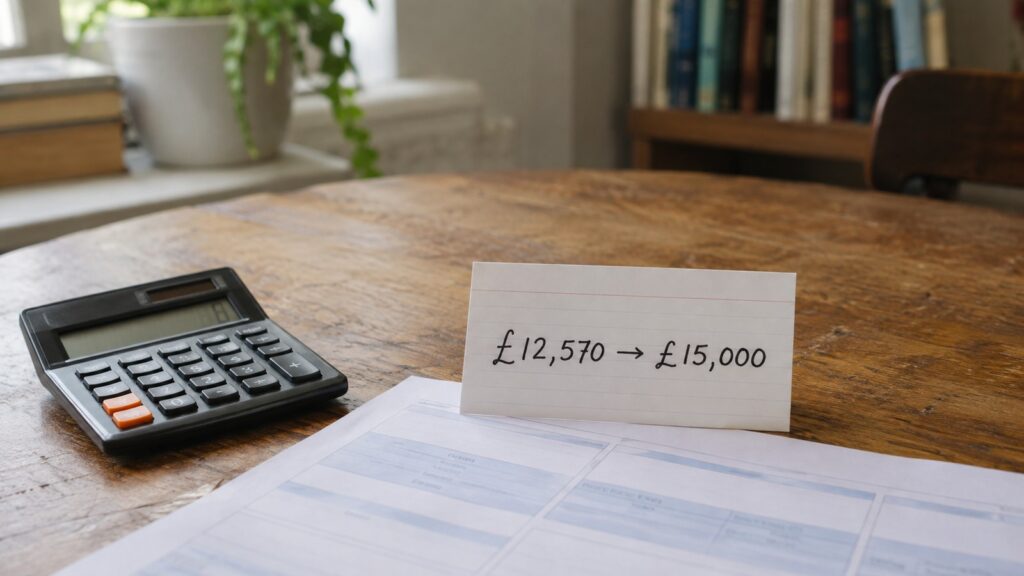
Reform UK has promised to raise the income tax Personal Allowance from £12,570 to £15,000 within its first 100 days in government if it wins the next general election.
The £2,430 increase would save a basic-rate taxpayer with enough taxable income £486 a year on the allowance change itself. Reform describes that as a saving of about £500 and estimates that 2.9 million people would stop paying income tax altogether.
This is an election pledge, not a confirmed tax change. The current £12,570 allowance remains in place, and the government has frozen it until April 2031.
Who would benefit from a £15,000 Personal Allowance?
Under the current rules, most people can receive £12,570 of income before paying income tax. Someone earning £15,000 in England, Wales or Northern Ireland would normally pay basic-rate tax on £2,430, producing an annual bill of £486 before any other adjustments.
If the allowance rose to £15,000, people earning between the two thresholds could stop paying income tax. Those earning more than £15,000 would generally have £2,430 less income exposed to tax.
People already earning no more than £12,570 would not receive a direct income tax saving because they do not normally pay the tax now. The Personal Allowance also starts to reduce once adjusted net income exceeds £100,000, so the effect for higher earners would depend on whether Reform changed those rules too.
The maximum basic-rate saving would be £486, not a cash payment
The proposed benefit would arrive through a smaller income tax deduction rather than a separate £500 payment. Dividing the £2,430 increase by the 20% basic rate gives £486, or £40.50 a month if the saving were spread evenly across a year.
The exact result would depend on a person’s income, tax code and where they live. Scotland sets its own income tax rates and bands, while the UK-wide Personal Allowance is controlled at Westminster.
Reform has not yet set out in detail whether linked thresholds, including the point where the higher rate begins, would move with the allowance. That matters because it could change the saving for some higher-rate taxpayers.
National Insurance is separate from income tax
Raising the Personal Allowance would not by itself raise the threshold for employee National Insurance. A worker could therefore stop paying income tax on earnings below £15,000 but still owe National Insurance under the rules in force at the time.
The take-home benefit could also be smaller for some people receiving means-tested support. The Institute for Fiscal Studies explains that a higher post-tax income can reduce entitlement to means-tested benefits.
Reform says the policy would cost £17.7 billion in its first year
Reform’s announcement puts the first-year cost at £17.7 billion, rising to £21 billion by the fifth year. The party says it would pay for the tax cut from £80 billion of planned public-spending reductions.
Those wider savings include proposed cuts to welfare, net-zero programmes, the civil service and foreign aid. They have not been implemented, and the tax pledge would require Reform to win power and pass the necessary legislation before anyone’s allowance changed.
For now, the standard Personal Allowance remains £12,570. Reform says Robert Jenrick, its economic spokesman, would introduce the £15,000 threshold within 100 days of becoming chancellor, with £20,000 remaining the party’s longer-term aim.