
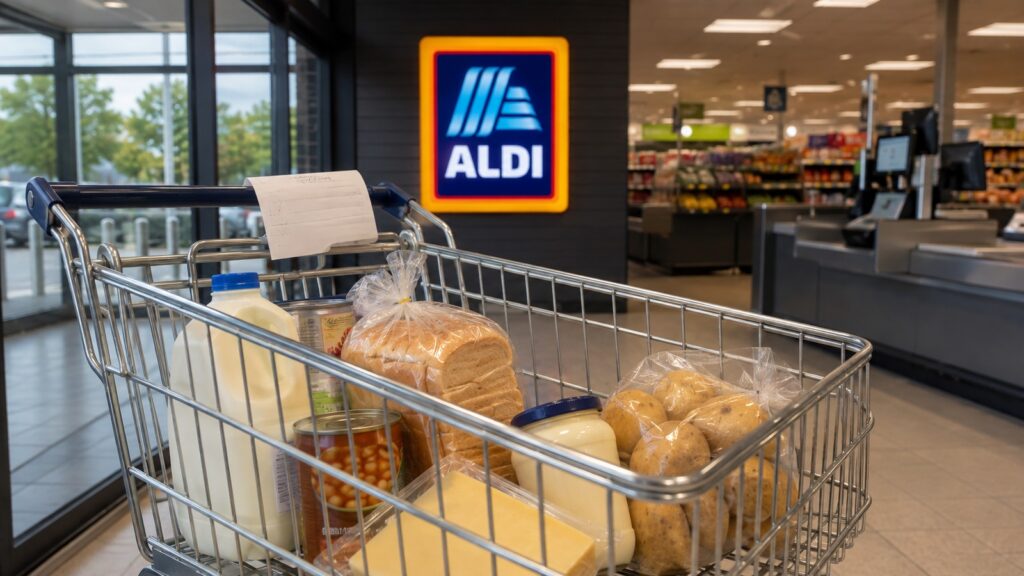
Aldi had the lowest average total in Which?’s August supermarket comparison, with its 92-item list costing £159.36 — just £1.74 less than Lidl.
The consumer group tracked a mixture of popular branded and own-brand groceries throughout the month. Its list included everyday products such as milk, cheese, sliced bread, potatoes and baked beans.
Aldi has now finished first in every monthly Which? comparison published in 2026. However, the result is a comparison of one defined list rather than a guarantee that Aldi will be cheapest for every household or every product.
How the supermarkets compared in August
Which?’s August price check produced the following average totals:
- Aldi: £159.36.
- Lidl: £161.10.
- Asda: £185.21.
- Sainsbury’s with Nectar: £185.55.
- Tesco with Clubcard: £189.45.
- Tesco without Clubcard: £192.97.
- Morrisons: £194.11.
- Sainsbury’s without Nectar: £195.33.
- Ocado: £207.62.
- Waitrose: £223.75.
Lidl remained close to Aldi, while the gap to the cheapest full-range supermarket was much larger: Asda’s total was £25.85 more than Aldi’s. Waitrose was the most expensive in the comparison, at £64.39 more than Aldi for the same list.
Nectar beat Clubcard on this basket
Sainsbury’s moved ahead of Tesco when both loyalty schemes were included. Its Nectar total averaged £185.55, compared with £189.45 at Tesco using Clubcard prices — a difference of £3.90.
The loyalty saving was also larger at Sainsbury’s. Nectar reduced its total by £9.78, while Clubcard cut Tesco’s by £3.52. Which? recorded 26 Nectar discounts and 19 Clubcard discounts among the 92 products during August.
Those figures only apply to this list and month. A loyalty offer on something you never buy does not reduce your own bill, while an offer on a regular purchase may make a bigger difference than the overall ranking suggests.
Why your cheapest supermarket may be different
Which? calculated the average price of each product across August and then added the results together. The branded products were directly comparable, but own-brand lines cannot be identical between supermarkets; the consumer group says it matches them as closely as possible on factors including quality and weight.
The comparison also does not mean Aldi was cheapest for every item. Your result depends on the products and pack sizes you buy, the loyalty prices you can access, and whether the store has everything on your list.
A small headline saving can disappear if switching supermarkets adds travel costs or forces a second shop. Lidl’s £1.74 gap is a useful example: for some households, convenience or avoiding an extra purchase may matter more.
For a broader look at price, product range, own brands and loyalty offers, see our guide to comparing UK supermarkets. The most reliable way to find your own cheapest option is to compare the unit prices of the products you buy repeatedly and include any delivery, fuel or top-up-shop costs.