
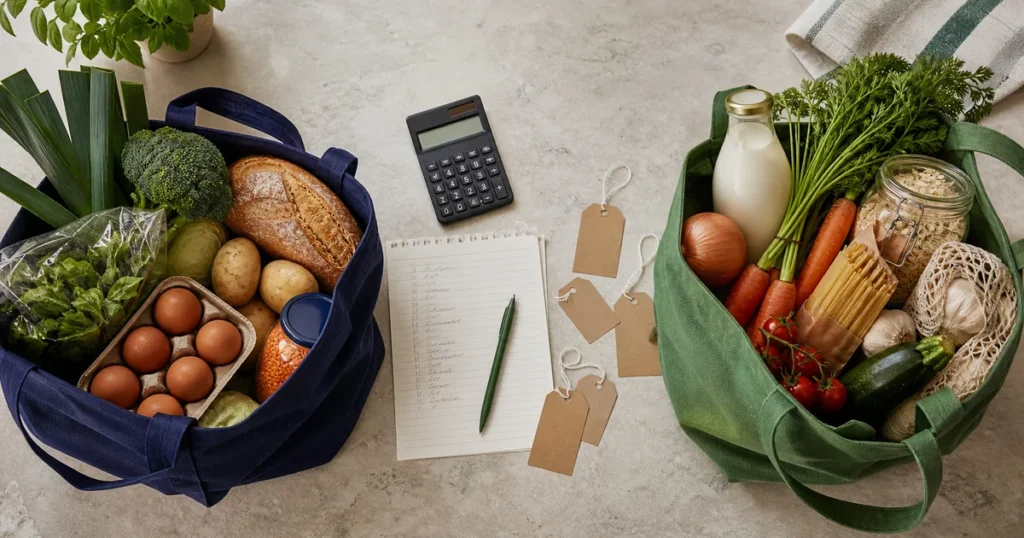
Aldi is the cheapest UK supermarket on the latest broad comparison. In Which?’s July 2026 study, its 93-item list cost £158.05, £2.65 less than Lidl and £27.76 less than Asda, the cheapest of the large full-range supermarkets.
That is not the whole answer. Asda was cheapest for a separate 224-item list made entirely from popular brands, while Aldi led a separate own-brand-only comparison. Tesco is a strong all-round choice when range, online shopping and customer ratings matter. Waitrose costs more on a typical mixed list, but it was cheaper than Tesco and Sainsbury’s for branded goods when neither loyalty card was used.
The useful question is therefore not simply “Which supermarket is cheapest?” It is “Which is cheapest for the things I buy, in a format I can actually use?” The figures below are dated snapshots, not a promise about your next receipt. Offers, pack sizes and stock change, and a cheap main shop can lose its advantage if you need a second shop for everything the first store did not sell.
The short answer: which supermarket wins each measure?
No chain leads every category. The current evidence points to different winners depending on what you value.
| What matters most | Strongest current choice | Why |
|---|---|---|
| Lowest mixed basket | Aldi | Cheapest July 2026 93-item branded and own-label list |
| Closest discount rival | Lidl | Only £2.65 more than Aldi on the same list |
| Cheapest branded products | Asda | Cheapest July 2026 224-brand list for a sixth consecutive month |
| Cheapest own-brand products | Aldi | Led a separate 30-item own-brand comparison in February 2026 |
| Most loyalty offers in the branded sample | Sainsbury’s | 155 Nectar-priced products, ahead of Tesco’s 143 |
| Best large-supermarket all-rounder | Tesco | Joint-second in Which?’s in-store survey, with strong range and quality ratings |
| Highest-rated own-label and fresh quality | M&S and Waitrose | Both received five stars from customers; they are not the price winners |
| Best value-focused own label | Aldi, with Lidl close | Low basket totals plus frequent success in independent taste tests |
For families, Aldi is the first place to look when the lowest bill is the priority and its range covers the list. Asda makes a better starting point for households that buy many named brands. Tesco is the safer all-round choice when you need a large range, online delivery, specialist products or a dependable one-stop shop.
These are starting points rather than instructions to drive across town. Saving £2.65 by changing from Lidl to Aldi is not much of a win if the journey costs more, takes longer or leads to an extra top-up shop.
Aldi, Lidl, Tesco, Asda and Morrisons compared on price
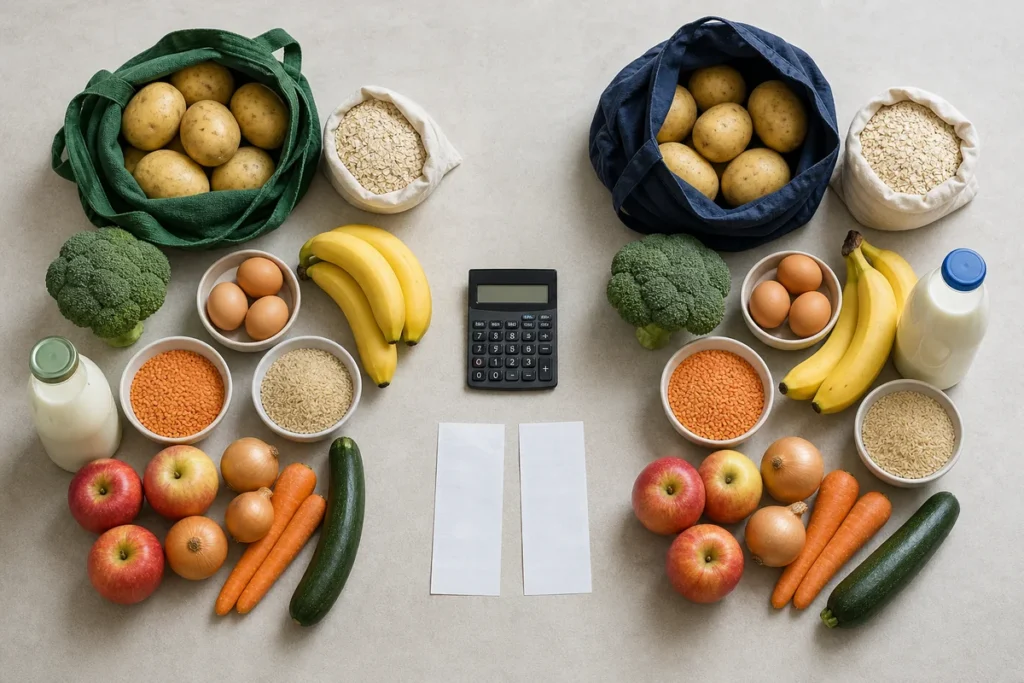
*A fair price comparison starts with matching products and pack sizes.*
The cleanest way to answer the supermarket head-to-heads is to use one list and one month. Which? tracked average prices for 93 branded and own-label groceries throughout July 2026. It included ordinary offers and eligible Clubcard and Nectar prices, but not multibuys, loyalty points, personalised discounts or rewards used later.
| Supermarket | July 2026 total | Difference from Aldi |
|---|---|---|
| Aldi | £158.05 | — |
| Lidl | £160.70 | £2.65 more |
| Asda | £185.81 | £27.76 more |
| Sainsbury’s with Nectar | £187.86 | £29.81 more |
| Tesco with Clubcard | £188.45 | £30.40 more |
| Morrisons | £195.63 | £37.58 more |
| Tesco without Clubcard | £195.63 | £37.58 more |
| Sainsbury’s without Nectar | £197.85 | £39.80 more |
| Waitrose | £226.95 | £68.90 more |
Aldi vs Lidl
Aldi was cheaper than Lidl by £2.65 on the July list. It also finished ahead in every published month from January to July 2026, although the gap was often small. Lidl is not generally cheaper than Aldi on the latest national basket evidence, but it can still be cheaper for an individual list or when a Lidl Plus offer matches something you planned to buy.
Treat the pair as close rivals rather than assuming there is a huge gulf between them. Store location, bakery preferences, pack sizes and what is in stock may be worth more than the headline difference.
Tesco vs Asda and Sainsbury’s
Asda was cheaper than Tesco by £2.64 when the Tesco total included Clubcard prices. Without Clubcard, Asda’s advantage grew to £9.82. On this evidence, Tesco is not cheaper than Asda for a general mixed shop.
Tesco and Sainsbury’s switched places depending on membership. With both cards used, Sainsbury’s was 59p cheaper: £187.86 with Nectar against £188.45 with Clubcard. Without either card, Tesco was £2.22 cheaper: £195.63 against £197.85. That is a good example of why “Tesco vs Sainsbury’s” needs a loyalty assumption before it has an answer.
Aldi or Lidl vs the large supermarkets
The discount chains had a clear lead on the tested list:
- Aldi was £30.40 cheaper than Tesco with Clubcard and £37.58 cheaper without it.
- Lidl was £27.75 cheaper than Tesco with Clubcard.
- Aldi was £27.76 cheaper than Asda.
- Aldi was £37.58 cheaper than Morrisons.
- Lidl was £34.93 cheaper than Morrisons.
The comparison is fair for the products on the list, but not every shopping mission. Aldi and Lidl stock fewer national brands and may not have the same depth of specialist-diet, world-food or household ranges. A household that completes 90% of its list at Aldi and buys the rest somewhere else should compare the combined cost, not celebrate the first receipt and quietly forget the second.
Tesco vs Morrisons
Tesco without Clubcard and Morrisons tied at £195.63. With Clubcard prices, Tesco was £7.18 cheaper. Morrisons did not gain enough relevant member-price reductions on this particular list to move ahead.
That does not mean every Tesco shop beats Morrisons. Fresh counters, fuel, local ranges, personalised More offers and product availability may matter to a particular household. It does mean Morrisons was not a price leader in the latest broad comparison.
Are Sainsbury’s, Morrisons and Waitrose expensive?
Price and value are related, but they are not the same. A store can charge more and still be worth using because it sells the exact range you need, delivers reliably or prevents a second trip. Equally, attractive shops and premium packaging do not make an expensive basket good value by themselves.
Is Sainsbury’s expensive?
Sainsbury’s is not especially expensive when Nectar prices are included. Its £187.86 July total was only £2.05 above Asda and 59p below Tesco with Clubcard. In that comparison it sat near the middle, not at the premium end.
Without Nectar, the answer changes. The same list averaged £197.85, £12.04 more than Asda and £9.99 more than Sainsbury’s member total. On the separate branded list, Sainsbury’s without Nectar was the most expensive option at £881.88 — even above Waitrose.
So Sainsbury’s can be competitively priced for a loyalty member, but poor value for a shopper who regularly pays the non-member price on promoted goods. Its stronger customer ratings for range and own-label quality also help explain why some households accept a small premium over Asda.
Is Morrisons good value?
Morrisons is reasonable rather than outstanding value on the current evidence. It matched Tesco’s non-member total on the mixed list but cost £9.82 more than Asda and £37.58 more than Aldi. On the branded list, Morrisons with a More Card cost £799.24 — 3.82% above Asda but below Sainsbury’s with Nectar.
Its value depends heavily on the products and offers you use. Morrisons had only seven loyalty-priced products in Which?’s July branded sample, compared with 143 at Tesco and 155 at Sainsbury’s. More points, personalised coupons, fuel benefits or a useful counter can still add value, but they should be counted only when you genuinely redeem or use them.
For a family choosing a main shop purely on current national price evidence, Aldi, Lidl and Asda have stronger cases. Morrisons may win locally when its fresh range, store format or specific offers fit the household better.
Is Waitrose really more expensive?
Usually, yes — especially for a mixed shop. Waitrose’s July total was £226.95, £68.90 or 44% more than Aldi and £41.14 more than Asda. That is too large to dismiss as a few fancy extras.
But “Waitrose is always the most expensive” is also too simple. Its £851.82 total on the separate branded list was lower than Tesco without Clubcard and Sainsbury’s without Nectar. When the product is the same national brand, loyalty pricing and ordinary promotions can matter more than the retailer’s premium reputation.
Waitrose also received five stars for range and for the quality of own-label and fresh products in Which?’s 2026 customer survey. You may decide that quality or service is worth paying for in selected categories. A practical compromise is to buy the products where you notice the difference at Waitrose, rather than moving the entire weekly shop there by default.
Branded products or own brand: where should you shop?
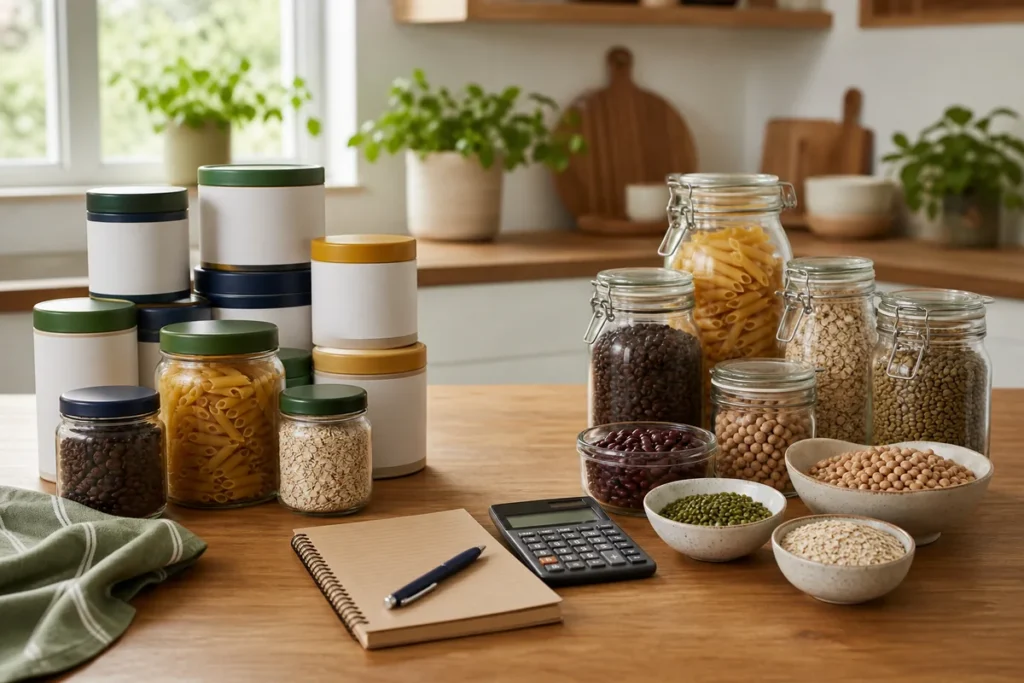
*Compare equivalent quality tiers and unit prices, not packaging alone.*
The cheapest supermarket changes because branded and own-label comparisons test different business models.
Cheapest for branded products
Asda is the strongest current answer. Which?’s July 2026 list of 224 popular brands cost £769.80 at Asda. Tesco with Clubcard was next at £781.07, followed by Morrisons with More at £799.24 and Sainsbury’s with Nectar at £801.48.
Aldi and Lidl were not included because they did not stock enough matching brands. That limitation is important: the discounters may sell a cheaper own-label alternative, but it is not the same product. If your household wants a particular coffee, cereal, detergent or allergy-safe brand, Asda’s result is more relevant than Aldi’s mixed-basket win.
Offers can reverse individual products, so compare repeat purchases rather than relying on one chain’s overall reputation. Tesco with Clubcard, for example, was cheapest for some items in the July brand sample even though Asda won the full list.
Cheapest for own-brand products
Aldi is also the best-supported answer for own brand. A separate Independent analysis of 30 own-brand food items in February 2026, with promotions excluded, put Aldi at £45.14, Lidl at £46.29 and Asda at £49.52.
The later Which? mixed list, which contains many own-label products and a small number of brands, points in the same direction: Aldi first, Lidl second and Asda third. Neither study proves Aldi is cheapest for every own-brand item, but together they make it the sensible first choice for a mostly own-label basket.
Own brand is not one quality tier. Large supermarkets may offer budget, standard and premium versions, while Aldi and Lidl use a collection of exclusive labels. Compare like with like. A budget tin at one shop is not necessarily the proper comparison for a premium recipe product at another.
Unit price matters too. The cheapest pack may cost more per 100g, while the cheapest unit price can still waste money if the pack is too large to use. Price, quality and usable quantity belong in the same calculation.
Which supermarket has the best offers?
*The final basket total matters more than the number of offer labels.*
Sainsbury’s had the most loyalty offers in the latest large branded comparison: 155 of the 224 products carried a Nectar price during July, compared with 143 Clubcard-priced products at Tesco and seven More-priced products at Morrisons.
That makes Sainsbury’s the answer if “best offers” means the greatest number of member prices on that particular list. It does not make it the cheapest place to buy the list. Tesco’s Clubcard total was £20.41 lower than Sainsbury’s Nectar total, and Asda beat both without using member-only pricing in the same way.
The Competition and Markets Authority’s loyalty-pricing review found that loyalty prices are usually real discounts. Of around 50,000 promotions, 92% represented a genuine saving against the retailer’s usual price; average savings on loyalty-priced products ranged from 17% to 25%. It also found examples where the loyalty price was still more expensive than another retailer.
The most useful hierarchy is:
- Check the final price of the product you need.
- Compare the unit price and pack size.
- Count an immediate loyalty discount.
- Count points or a future voucher only if you expect to redeem them.
- Ignore an offer that adds an unplanned item to the basket.
Tesco and Sainsbury’s currently provide the deepest broad loyalty-price coverage. Which one has the best offers for you will depend on your repeat products. Aldi’s simpler proposition can still produce a lower bill without a dramatic crossed-out price, while Asda’s branded total shows that a store does not need the most loyalty labels to offer the best final value.
Best for families, range and own-brand quality
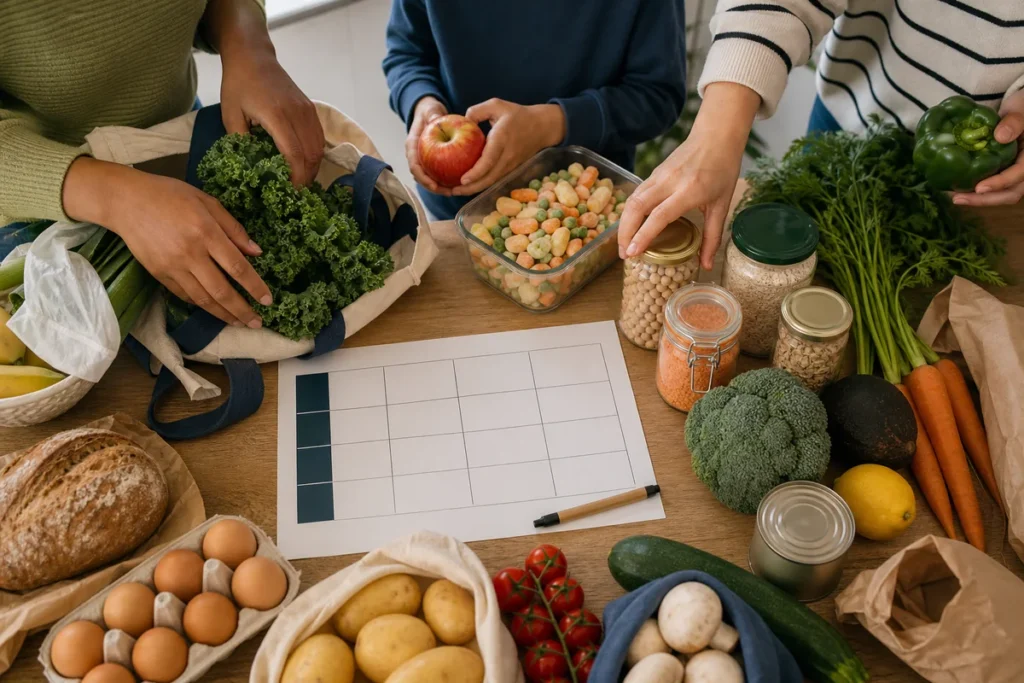
*The best family supermarket depends on range, access and what the household will use.*
There is no single “family supermarket” because families do not share one shopping list, budget, schedule or definition of convenience. A household with a car, plenty of storage and flexible tastes can use a discounter very differently from a household relying on delivery and buying several specialist products.
These are the most defensible starting points:
- Aldi for the lowest routine bill. It is the current mixed-basket and own-brand price leader. It works best when its range covers most of the list and you are comfortable switching from national brands.
- Lidl when it is closer or its range suits you better. Its July total was only £2.65 above Aldi. That small gap is easy for travel, waste or one extra purchase to erase.
- Asda for brand-heavy family shops. It led the 224-brand comparison and was the cheapest full-range supermarket on the mixed list.
- Tesco for the strongest all-round compromise. It combined a 76% in-store customer score with four-star ratings for range, customer service and own-label/fresh quality. Clubcard is important to its price case.
- Sainsbury’s for a broad range with good own-label ratings. It received four stars for range and quality, but Nectar membership makes a material difference to value.
- Waitrose for higher-rated quality and range. It received five stars for both, but the mixed-basket premium means it is easier to justify selectively than as the default cheapest family shop.
Which supermarket has the best own-brand range?
If “best range” means the broadest choice with reliably good customer ratings, Tesco and Sainsbury’s are the strongest mainstream answers. Both received four stars for range and availability and four for own-label and fresh quality in the Which? 2026 supermarket survey. Tesco’s slightly higher overall in-store customer score makes it the better all-round pick.
Waitrose and M&S received five stars for range and own-label/fresh quality, so they lead on customer-rated quality and breadth. They are not the best price choices. Aldi and Lidl received three stars for range, which reflects the trade-off behind the discounter model: fewer lines, faster turnover and a heavy emphasis on exclusive labels.
Which supermarket has the best own-brand products?
No supermarket wins every product. Which? blind-tests more than 250 food and drink products each year and regularly finds that cheaper own labels beat famous brands, with different retailers winning different categories. August 2026 recommendations included products from Aldi, Lidl, Co-op and Sainsbury’s.
For the highest customer-rated own-label and fresh quality, choose M&S or Waitrose. For value, start with Aldi and Lidl. For the best balance of breadth and perceived quality, Tesco and Sainsbury’s are safer bets.
The best approach is to switch gradually. Try the own-brand version of one repeat item at a time. Keep it if the household likes it; switch back if it creates waste or complaints. A 40p saving is imaginary if nobody eats the product.
Local markets and convenience stores
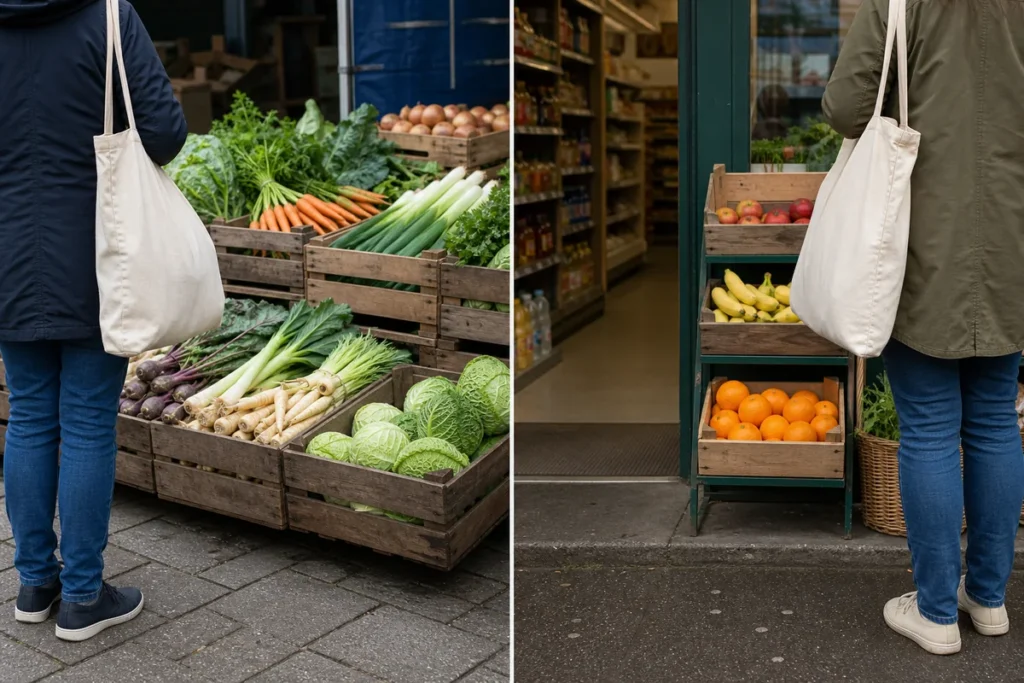
*Local prices vary, so compare the products and quantities you actually need.*
Alternative places to shop do not follow one national price pattern, so this is where local checking matters most.
Are local markets cheaper than supermarkets?
Sometimes, especially for seasonal fruit and vegetables, larger quantities or produce discounted near the end of the day. But there is no reliable current UK-wide basket study showing that local markets are generally cheaper than supermarkets.
The word “market” covers very different businesses. A street-market greengrocer clearing ripe produce can undercut a supermarket. A farmers’ market selling small-batch, organic or speciality food may charge more. Quality, grade and shelf life can also differ, so compare what you can actually use.
Check:
- price per kilogram or per item;
- the quantity you must buy;
- how soon the food needs using;
- whether card payments or travel add a cost; and
- whether the stall replaces part of the supermarket shop or creates an extra trip.
Markets can be excellent value for selected products without being the cheapest place for a complete weekly shop. A quick photo or note of your supermarket unit prices makes a more useful benchmark than memory.
Are convenience stores more expensive than supermarkets?
Generally, yes. Which?’s 2024 comparison of 42 products found average premiums of 21% at Morrisons Daily, 14% at Sainsbury’s Local and 11% at Tesco Express for Clubcard members when compared with the chains’ larger stores. Some individual items were cheaper in the small store, but the overall baskets cost more.
Those exact percentages are dated and loyalty arrangements have changed, so they should not be treated as today’s guaranteed mark-ups. The broader pattern remains credible: the CMA’s groceries cost-of-living update says shoppers who cannot reach large stores or shop online may depend on convenience stores where prices are generally higher.
Smaller shops can still be good value when they prevent waste or an expensive journey. Buying one pint of milk locally can cost less overall than travelling to a superstore and returning with several things that were not on the list. The problem is using convenience-store prices for a large routine shop when a cheaper accessible option exists.
Choose the cheapest supermarket for your real basket
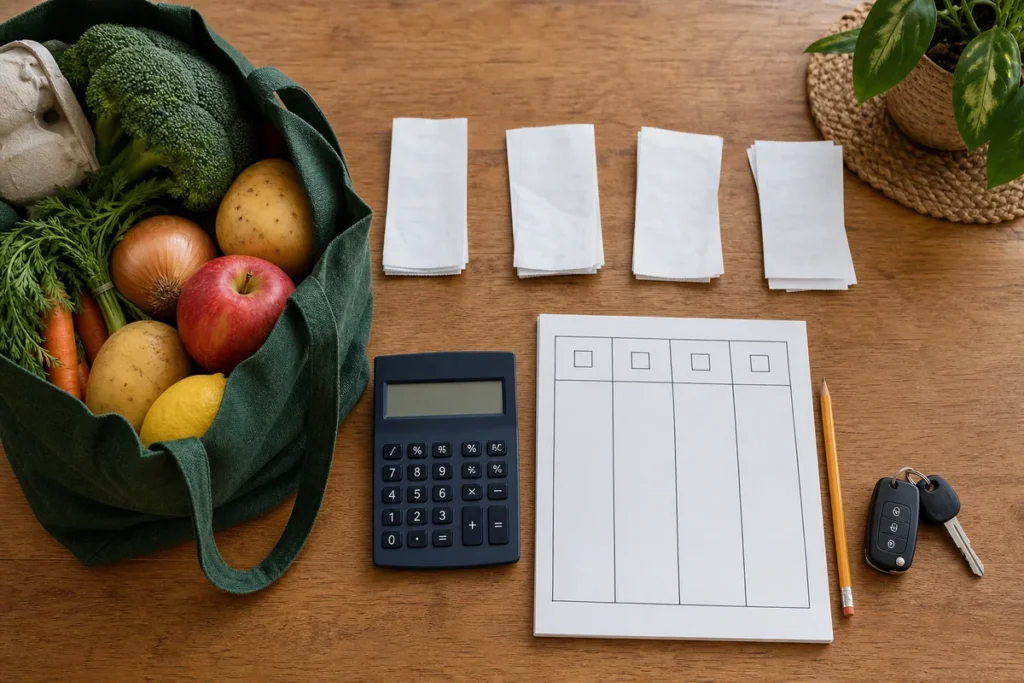
*Track complete costs, including top-ups and travel, before deciding whether to switch.*
Use the national rankings to choose two realistic candidates, then test the products your household buys repeatedly.
- Make a list of 20–30 regular items, including the brands you will not switch and the own-label products you will.
- Compare the same pack size or unit price at both supermarkets. Include the loyalty price only if you can access it.
- Add delivery, fuel, parking and the likely cost of a second shop.
- Record what you actually spend for four weeks, including top-ups and wasted food.
- Keep the supermarket that gives you the best repeatable combination of cost, quality and convenience.
For most price-led shoppers, Aldi is the best first test and Lidl is close behind. Choose Asda if brands dominate the trolley. Choose Tesco when range, delivery and completing the whole shop matter enough to justify a slightly higher total. Use Sainsbury’s with Nectar rather than without it, treat Morrisons as a local-value decision, and expect Waitrose to cost more unless you buy selectively.
The cheapest supermarket is not the one with the brightest offer labels. It is the one that gets the food your household will actually use into the kitchen at the lowest total cost — without requiring a second expedition to finish the job.