
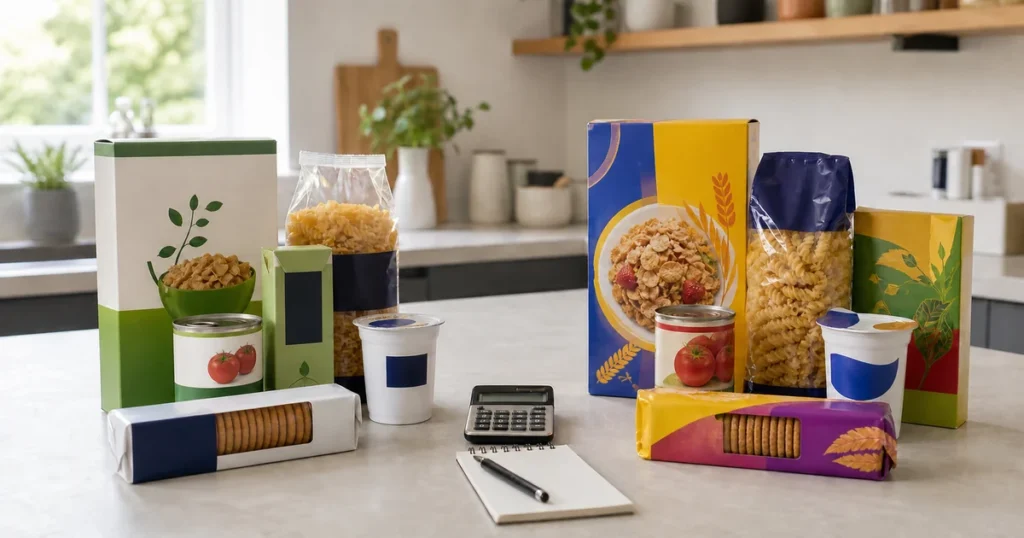
Supermarket own-brand food can be every bit as good as a branded alternative for the job you need it to do. It can also be noticeably different. The label on the front does not settle the question: the recipe, ingredients, nutrition, taste, texture and price all matter more than whether a famous name appears on the packet.
For most households, the best-value trolley is a mixture. Use own brand as the default for simple staples and products where you barely notice a difference. Keep paying for the branded foods whose flavour, reliability or suitability genuinely matters to you. A brand is worth more only when it gives you something you value — not simply because the packaging is familiar.
Is supermarket own-brand as good?
Often, yes. Independent blind taste tests regularly find cheaper supermarket products that match or beat well-known brands. That is useful evidence that a higher price does not guarantee a better-tasting product, but it does not mean every own-brand version will be equal. Results change from one food and retailer to another.
Own brand is not one quality level. A large supermarket may sell a low-cost range, its standard own label and a premium line, all with different recipes. Comparing a budget tomato sauce with a premium branded one tells you less than comparing products designed for a similar purpose and price tier.
Both branded and supermarket prepacked foods have to provide required label information. The UK food-labelling rules give you something more useful than assumptions about the packaging. You can compare the food name, quantity, ingredients, allergens, storage instructions, date and nutrition panel. Ingredients are generally listed from the greatest to the smallest amount by weight, and the percentage of a highlighted ingredient may also be shown.
The same manufacturer can produce food for several customers, but that does not prove two products are identical. Recipes, ingredient proportions and specifications can differ. Treat “made in the same factory” stories as interesting supermarket folklore, not a reason to ignore the label or your own taste.
How to compare own brand with a branded product
Start by checking that you are comparing the same kind of food. “Tomato soup” can mean a basic everyday tin, a reduced-salt recipe, an organic product or a premium soup with cream and a higher tomato content. Match the format and intended use before judging the price.
Then work through five checks.
1. Read the ingredients in context
Look at the first few ingredients and any percentages that matter to the product. For a tomato pasta sauce, you might compare the tomato content, oil, added sugar, salt and herbs. A longer ingredients list is not automatically worse, and a shorter one is not automatically better; the question is whether the recipe suits what you want.
If you have a food allergy or intolerance, check the full ingredients and precautionary allergen information every time you try a different product. Do not assume an own-brand copy has the same allergen profile as the brand you already use. Recipes and warnings can change, so recheck familiar products occasionally too.
2. Compare nutrition per 100g or 100ml
Pack sizes and suggested portions can make two products difficult to compare. The per-100g or per-100ml figures put them on the same basis. The Food Standards Agency explains how to compare nutrition labels. Check the nutrients that matter for the food and your needs, such as salt, sugars, saturated fat, fibre or protein, rather than deciding from one front-of-pack colour.
3. Use the unit price
Compare pence per 100g, per kilogram, per litre or per item rather than the pack price alone. Government guidance on unit pricing confirms that a larger pack is not necessarily cheaper per unit. A branded product on promotion can cost less than own brand, while the lowest unit price is still poor value if the pack is too large and some goes to waste.
4. Think about the job it does
Differences matter less when an ingredient disappears into a bigger recipe. Own-brand chopped tomatoes in a chilli may be an easier swap than the coffee you drink black every morning. Flour used in a sauce has a different role from chocolate served on its own.
Cooking performance can matter as much as flavour. Pasta that turns soft too quickly, cheese that does not melt as you need it to or rice with an unsuitable texture may not be a saving for your usual meals.
5. Count what gets eaten
A cheaper product saves nothing when nobody wants it. If a 75p cereal replaces a £2 box but half goes stale because the household dislikes it, the theoretical saving has vanished. Value is the cost of the food you actually use, not the size of the gap on the shelf label.
The best products to try own-brand first
The strongest own-brand candidates are usually foods with a simple specification, a short or predictable ingredients list and little reliance on a distinctive branded recipe.
Good starting points include:
- Plain dry staples: flour, sugar, salt, oats, rice and basic pasta. Check the type carefully — bread flour is not interchangeable with plain flour, and brown rice cooks differently from white.
- Tinned basics: beans, pulses, chopped tomatoes and sweetcorn used in cooking. Compare drained weight, salt, sauce and the percentage of the main ingredient.
- Frozen fruit and vegetables: simple packs without sauces or flavourings can be easy to compare. Choose cuts and pack sizes you will use.
- Basic dairy and eggs: milk, plain yoghurt, butter and eggs can be sensible own-brand buys when the fat level, ingredients, farming or welfare standard and pack size meet your preference.
- Cooking ingredients: stock cubes, vinegar, cooking oil, herbs and spices are worth testing when their strength or flavour will not dominate the dish.
- Everyday snacks and biscuits: Which? blind taste tests have shown that some supermarket versions can match or beat brands. Buy a small pack first because taste is personal.
These are categories to test, not guaranteed winners. Coffee, olive oil and spices can look like simple ingredients while varying considerably in origin, roast, freshness, strength and flavour. A premium own brand may suit you better than either the cheapest version or the famous name.
When branded food is worth the extra
Branded food is worth paying more for when you can identify the benefit and would miss it if it disappeared. That benefit might be a particular flavour, predictable texture, reliable cooking result, convenient pack design or a product that safely meets a dietary need.
Taste-led foods are the most obvious candidates. Tea, coffee, breakfast cereal, chocolate, crisps, ketchup and mayonnaise can have distinctive recipes. You do not have to abandon a favourite that makes a small but important part of the day better. The useful question is whether that preference is worth the price difference to your household.
A brand may also earn its premium through consistency. If a particular flour gives you reliable bread, a pasta shape holds up in your usual recipe or a cheese melts exactly as needed, changing it may create failed meals or waste. Try the alternative once before changing a dependable repeat purchase.
Specialist products need more care. If you rely on a particular gluten-free, allergen-aware or fortified food, suitability comes before a saving. An own-brand alternative may be perfectly appropriate, but check its current label and any relevant professional dietary advice rather than assuming it is interchangeable. Foods for babies or special medical purposes are not sensible places for a casual price-led swap.
Finally, do not assume the brand always costs more. Promotions and loyalty prices sometimes narrow or reverse the gap. Compare the current unit price, but do not buy several packs merely because a familiar product is temporarily cheaper.
What to buy own-brand — and what to keep branded
There is no food that everyone should always buy branded. The closest thing to an “always branded” rule is personal: keep the exact product when switching would create a safety problem, ruin a recipe you depend on or make the food go uneaten.
Your keep-branded list might contain:
- a tea, coffee or condiment where you strongly prefer the taste;
- a cereal or snack for which the household rejects the alternatives;
- a baking or cooking ingredient with reliably better results; or
- a specialist product whose exact ingredients and allergen information meet an important need.
There is no universal “always own-brand” list either, but a strong default list is easier to make. Start with plain flour, sugar, salt, basic oats, simple rice and pasta, tinned pulses, chopped tomatoes and unseasoned frozen vegetables. When the own-brand product has the specification you need and performs the same in your cooking, paying for branding alone is difficult to justify.
Use the saving where it is painless. If own-brand flour saves 30p and nobody can tell, keep the 30p. If own-brand coffee saves £1.50 but makes every morning cup disappointing, that may be the wrong place to economise. A sensible budget does not require every item to be the cheapest.
Run a simple own-brand taste test
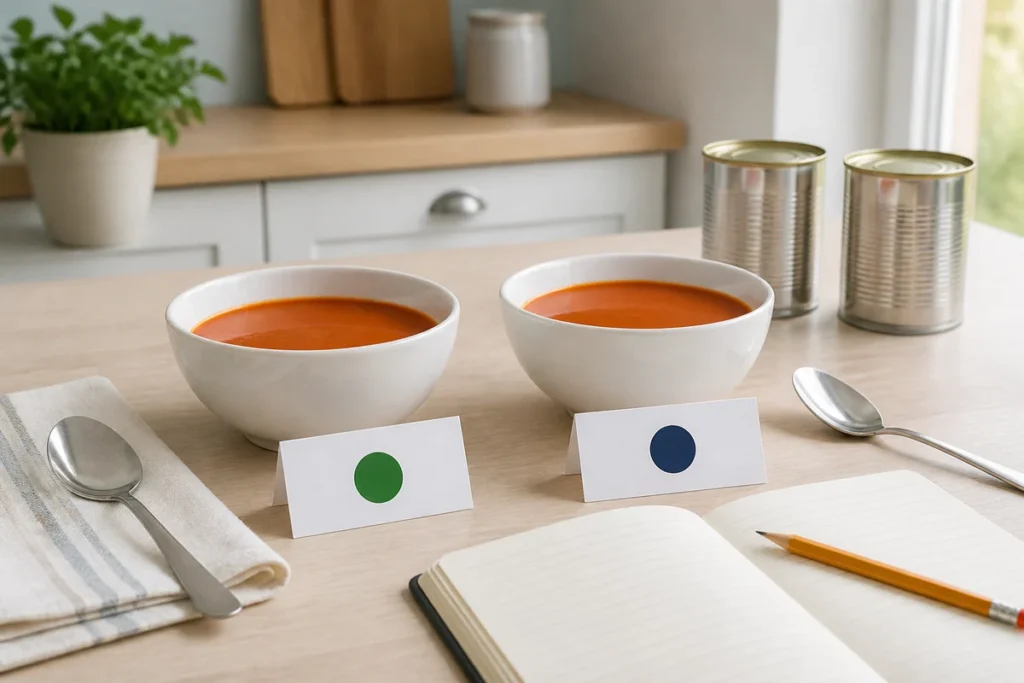
Switch one repeat purchase at a time. Changing ten products in one shop makes it hard to know which substitutions worked and can leave you with a cupboard full of food nobody wants.
For a taste-led product, make the comparison as fair as practical:
- Buy the smallest useful pack of the own-brand alternative.
- Serve both products in plain bowls or cups without showing the packaging.
- Compare flavour, texture and how the product works in its usual setting.
- Check the ingredients, nutrition, allergens and unit price before deciding.
- Keep the cheaper product only if you will use it just as readily.
You do not need scorecards and laboratory coats. A note on your phone with “keep”, “try another” or “switch back” is enough. Give borderline products a fair second use, particularly when a cooking time or quantity needs adjusting, but do not force yourself through six disappointing breakfasts to prove a saving.
Repeat the process with one or two products on each shop. After a month, you will have a personal list built from actual meals rather than packaging, habit or somebody else’s ranking.
Build your own save-and-spend list
Make own brand the starting point for simple, low-risk staples, then spend selectively where a brand delivers a benefit you can name. Compare equivalent products, read the labels, check the unit price and count waste. Those four habits answer the question more reliably than any fixed internet list.
If you want to take the next step, use the same approach when comparing UK supermarkets and follow the wider Steadsense guide to saving money on groceries. The goal is not an own-brand-only trolley. It is a shop in which every extra pound is doing a job you actually value.