
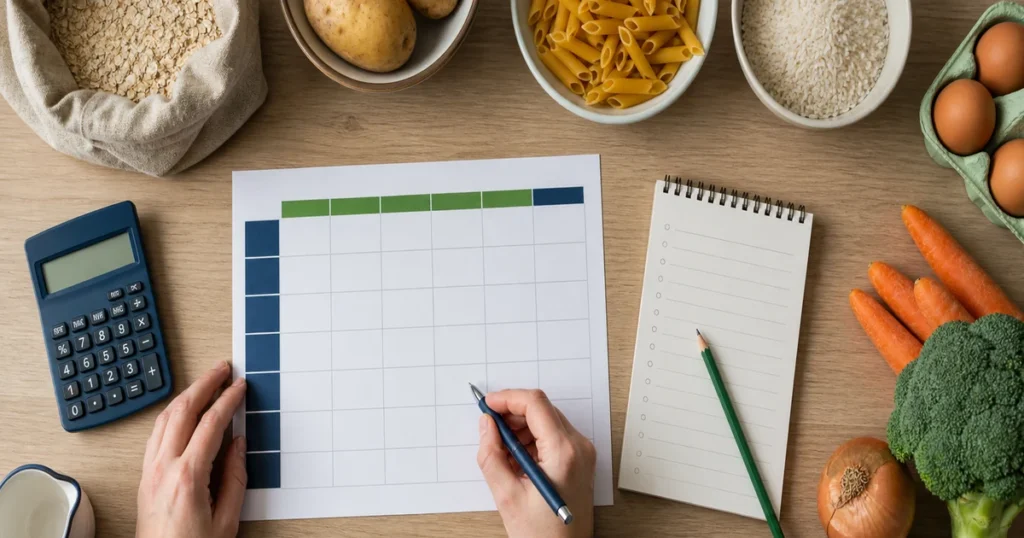
Meal planning means deciding what you are likely to eat before you buy the food. It can be a detailed seven-day timetable, but it does not have to be. Planning five dinners, a few lunches and one fallback meal is enough to give your next shop a purpose.
You should normally make the plan before your main grocery shop. Start with what is already in the kitchen and what the coming days will actually look like, then buy only the gaps. This is more useful than choosing seven recipes from scratch and discovering afterwards that you already own half the ingredients.
Meal planning can save money when it prevents duplicates, makes short-life food more likely to be eaten and reduces expensive top-ups or last-minute takeaways. It does not guarantee a fixed saving. A complicated plan full of one-use ingredients can cost more than a simple, flexible week.
A weekly plan is a good default, with a five-minute check halfway through. If your schedule or storage makes a full week hard to predict, plan three or four days at a time instead. The best routine is the shortest one that reliably gets you to the next shop.
What meal planning is — and whether it saves money
A meal plan is a decision made in advance about the meals, ingredients or meal types you intend to use over a set period. You might plan every breakfast, lunch and dinner, or only the evening meals that drive most of your grocery spending. Both count.
The value comes from linking three things that are often treated separately:
- food already at home;
- meals you realistically expect to eat; and
- a shopping list for what is missing.
WRAP’s household food-waste research associates lower waste with behaviours including meal planning, list making and using leftovers. That gives planning a sensible role in a money-saving routine, but it is not a promise that every household will save the same amount.
Planning tends to reduce spending when it helps you:
- use food before buying a replacement;
- buy a useful quantity instead of an aspirational one;
- share ingredients between several meals;
- schedule leftovers rather than forgetting them;
- keep an easy alternative to a takeaway; and
- recognise when an offer replaces a planned purchase.
It can fail when the plan assumes more time, energy or cooking enthusiasm than the week allows. It can also increase the bill when every recipe needs different herbs, sauces or fresh ingredients. A successful budget plan should make fewer demands on you, not turn dinner into a daily test of discipline.
The real test is what happens afterwards. Compare a few weeks of grocery spending, top-ups and discarded food with your previous routine. A shorter bill and less waste show that the plan is working; a beautiful planner does not.
How to make a budget meal plan before shopping
Planning before shopping is what turns the supermarket visit into a gap-filling exercise. If you shop first and plan afterwards, promotions and pack sizes have already made many of the important decisions for you.
Use this order:
- Choose the period and spending limit. A week is convenient for many households, but three or four days is fine. Decide how much of your grocery budget is available for this shop, including any delivery charge. If you need help setting the figure, use our guide to building a grocery budget from real spending.
- Check the diary. Count how many meals will actually be eaten at home. Include work shifts, school activities, social plans, visitors and evenings when cooking is unlikely. Do not buy seven dinners for a week with two meals elsewhere.
- Check the fridge, freezer and cupboards. Look at quantities, not just whether an item exists. Put food with an approaching use-by date, opened packs and tired produce on a short “use first” list.
- Start with the food that needs using. Turn those ingredients into the first meals of the plan. Half a bag of potatoes might become jacket potatoes or a tray bake; vegetables could go into soup, curry, pasta or an omelette.
- Choose a few flexible meals. Prefer dishes that can absorb substitutions and share ingredients. Tinned tomatoes might cover chilli and pasta sauce; yoghurt might work at breakfast and in a dressing; carrots could appear in soup, curry and a side dish.
- Give leftovers a named slot. “Cook extra chilli on Tuesday; eat it for Thursday lunch” is a plan. “Make loads and hope someone eats it” is not. The Food Standards Agency says properly cooked leftovers should be cooled and refrigerated within two hours, then eaten within 48 hours or frozen. Follow product instructions and any earlier use-by date, and take particular care with rice.
- Add one easy fallback. Keep a low-effort cupboard, fridge or freezer meal for the day the planned recipe is not realistic. It could be soup and toast, eggs on toast, a simple pasta dish or another suitable option your household will eat.
- Write a gap-only shopping list. Add the quantities missing from the meals, plus breakfast, lunch, snacks and household essentials that belong in the same budget. “Four apples” is easier to control than “fruit”.
- Estimate the total and adjust at home. Use recent receipts, online prices or rough category limits. If the plan is too expensive, change a meal, substitute an ingredient or remove a non-essential item before reaching the checkout.
You do not need a specialist app. A note on your phone or a sheet of paper with three columns — day, meal and food to use — can be enough. Keep the shopping list beside it so a change to one is reflected in the other.
Leave one meal slot open if plans often change. That does not make the plan incomplete. It prevents you buying ingredients for a meal that may never happen and gives leftovers somewhere to go.
Build cheaper meals from flexible ingredients
A practical budget meal usually has four parts:
- a starchy base such as oats, bread, potatoes, rice or pasta;
- a protein source such as beans, lentils, eggs, fish, meat, tofu or another suitable choice;
- fruit or vegetables; and
- flavour from herbs, spices, stock, sauce or an ingredient already at home.
This is a framework, not a rule for every plate. The NHS guidance on a balanced diet includes beans and pulses among protein foods and recognises fresh, frozen and canned fruit and vegetables. Dietary balance can be considered across the day or week, so one very simple meal does not need to contain every possible food group.
To keep the plan affordable:
- Use what you own first. The cheapest usable ingredient is often the one already paid for.
- Repeat ingredients, not necessarily meals. Rice can support a curry, chilli and egg-fried rice without producing three identical dinners.
- Use pulses where they suit the dish. Beans and lentils can provide the main protein or stretch a smaller amount of meat.
- Keep frozen, tinned and dried options available. They can make later-week meals less dependent on fresh food lasting perfectly.
- Choose a few reliable flavours. One flexible herb, spice blend or sauce used several times is usually better value than several ingredients bought for one recipe.
- Count portions that will be eaten. A six-portion recipe is not cheaper if two portions are discarded.
- Include realistic convenience. Pre-cut, microwaveable or ready-made components can be good value when they make the planned meal happen and prevent a more expensive alternative.
University College London Hospitals’ budget eating guidance highlights foods such as oats, dried rice and pasta, frozen vegetables, beans, lentils, eggs and canned fish. Use these as adaptable categories rather than a compulsory shopping list. Allergies, medical diets, taste, equipment and the food available locally all matter.
Which meals are usually cheapest?
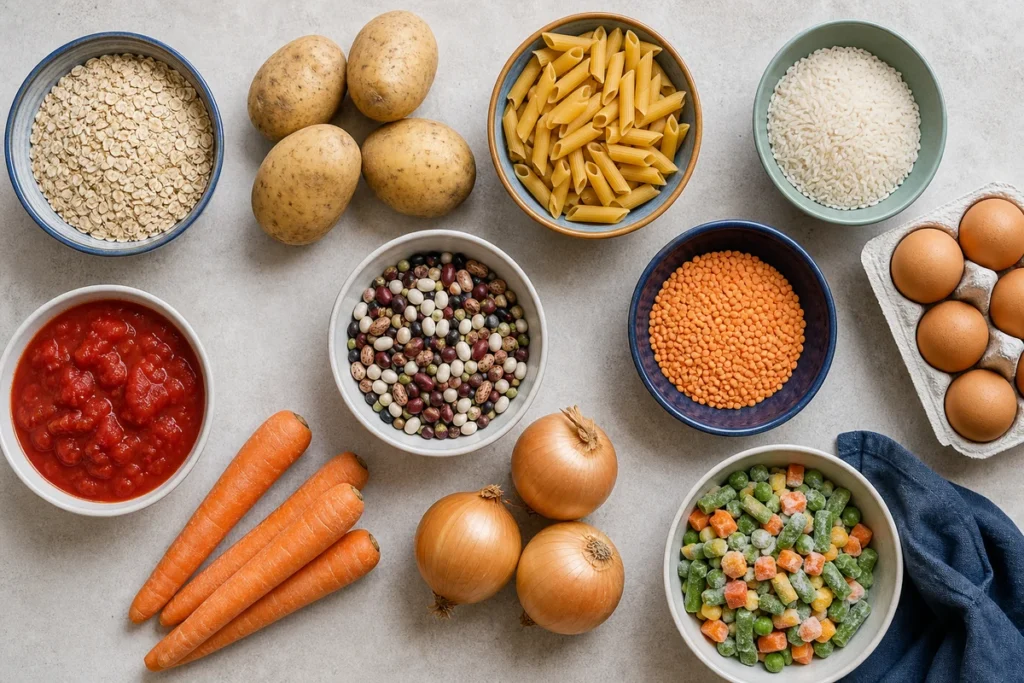
There is no single cheapest meal across the UK. The answer changes with local prices, portion sizes, dietary needs, cooking energy and what you already have. However, meals built around lower-cost staples, pulses, eggs and vegetables often give you more room to control the cost than dishes centred on a large amount of meat, fish or several one-use ingredients.
| Meal pattern | Why it can cost less | Easy ways to vary it |
|---|---|---|
| Porridge or overnight oats | Oats provide a simple base and portions are easy to measure | Add banana, frozen fruit, yoghurt, seeds or spices according to budget and need |
| Soup with bread | Uses vegetables, pulses and small amounts of ingredients that need using | Change the vegetables, add beans or lentils, or blend part of the soup |
| Jacket potato with a topping | Potatoes are a flexible base and the filling can be modest | Use beans, leftover chilli, tuna, cheese, yoghurt-based fillings or vegetables |
| Dhal, bean curry or chickpea curry | Pulses can be the main protein and dried spices serve many meals | Serve with rice, potatoes, flatbread or vegetables |
| Chilli or stew | Beans, lentils and vegetables can stretch a smaller amount of meat or replace it | Serve with rice, potatoes, wraps or bread; schedule leftovers |
| Tomato pasta or pasta bake | Dried pasta and tinned tomatoes form a repeatable base | Add beans, lentils, frozen vegetables, cheese or leftover cooked ingredients |
| Egg-fried rice, omelette or frittata | Eggs can turn small quantities of vegetables and starch into a meal | Use cooked vegetables, potatoes or rice while following safe storage guidance |
The meals that save the most money are not necessarily the ones with the lowest theoretical ingredient cost. They are usually meals that do at least one of these jobs:
- use food that would otherwise be wasted;
- replace a takeaway or expensive emergency purchase;
- turn one costly ingredient into several portions;
- use overlapping ingredients already needed elsewhere in the week; or
- create a second meal that is deliberately scheduled and stored safely.
For example, a lentil dish may be inexpensive from scratch, but it saves nothing if nobody wants it and another dinner is bought. A slightly dearer familiar meal that uses the food in your fridge and prevents a takeaway may produce the larger real saving.
Compare the cost of the quantity used in the recipe, then divide by the number of portions actually eaten. Include obvious extras such as side dishes and toppings. You do not need to price every pinch of spice; consistent rough comparisons are enough to identify which of your regular meals give good value.
Plan around offers without letting offers set the budget
Offers can make a meal plan cheaper, but only when they change a purchase you were going to make. Starting on the offers page and inventing a week around every discount often creates a larger basket, not a lower bill.
Check promotions after you have looked at home and outlined the week. Then apply four tests:
- Replace: does the offer replace a planned ingredient or meal?
- Compare: is the final price and, where useful, the unit price lower than a suitable alternative?
- Use: do you have a specific meal or storage plan for the full quantity?
- Adjust: have you removed or postponed the spending it replaces?
If chicken is discounted and it suits your household, it might replace the protein in two planned meals. Keep the vegetables, starches and seasonings similar, then remove the other protein from the list. If a large bag of vegetables is on offer, plan two dishes that use it or freeze a suitable portion. If the only way to use a promotion is to buy five more ingredients, it may not reduce the total.
In Great Britain, government price-marking guidance explains how unit prices help compare similar products sold in different quantities; Northern Ireland has separate legislation. Some promotional situations have exemptions, so calculate the comparison yourself when the label is unclear.
A lower unit price is not automatically better value. The larger pack must fit today’s budget, your storage and the meals you will actually eat. Two for £5 instead of one for £3 means spending £2 more now. It only saves money if you would otherwise buy and use the second item.
Reduced short-life food deserves the same test. Give it a meal slot before buying it, check the use-by date and freeze it in time if suitable. Do not allow a yellow sticker to displace food at home that needs using sooner. Our wider guide to saving money on groceries covers unit prices, usable quantities and promotions in more detail.
How often to meal plan
Plan at the same rhythm as your main shop. For many households, that means once a week, shortly before ordering or going to the supermarket. A weekly view is long enough to share ingredients across meals without demanding that you predict the distant future.
Use a shorter rolling plan if:
- your work or caring schedule changes at short notice;
- you have little fridge or freezer space;
- you buy food on foot and shop more frequently;
- your energy or appetite is difficult to predict; or
- a full week of decisions feels like too much work.
In that case, plan three or four days, shop for those meals and keep the later part of the week based on longer-life staples. Planning fortnightly can work for cupboard and freezer stock, but fresh meals may still need a weekly or midweek check.
Whatever interval you choose, do a five-minute reset halfway through:
- check what has been eaten and what remains;
- move short-life food to the next available meal;
- freeze suitable food before its use-by date if you will not use it;
- replace a cancelled meal with leftovers or the fallback; and
- add only genuine gaps to any top-up list.
Review the routine after three or four weeks. Note grocery spending, extra shops, takeaways caused by a failed plan and food discarded. If the plan repeatedly breaks in the same place, change the plan rather than blaming yourself. You may need fewer recipes, more convenient ingredients, a second small shop or two fallback meals.
To begin, plan just three dinners from food already at home, one meal that creates a scheduled leftover and one easy fallback. Write the missing quantities on a list and shop from that list. Once this small version works, extend it only as far as it continues to save money and make the week easier.