
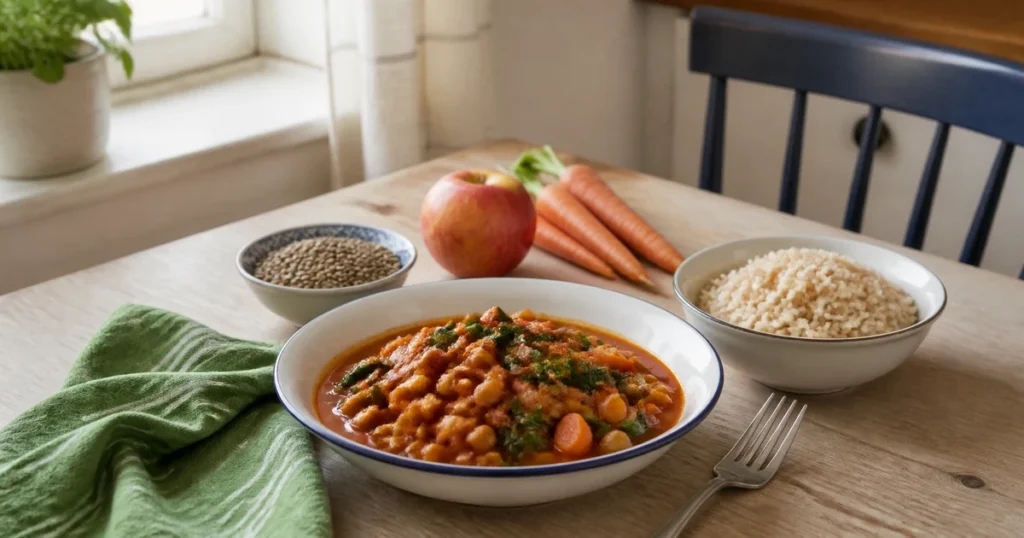
Yes, healthy eating can be affordable. Oats, potatoes, beans, lentils, eggs and a mixture of fresh, frozen and tinned produce can form the basis of a varied diet. You don’t need a shopping basket full of premium ingredients to eat well.
Start with foods that make meals you enjoy at a cost you can manage. That includes the time and equipment needed to prepare them, and whether you’ll use the whole pack. A lower price means little if half the food goes uneaten.
These are general ideas for adults. Adapt them to allergies and any dietary advice you’ve been given.
Build a balanced basket from everyday foods
Start with the shape of your meals. The NHS Eatwell Guide recommends a mixture of fruit and vegetables, starchy foods, protein foods, dairy or suitable alternatives, and small amounts of unsaturated oils. You can work towards that balance across a day or week; every plate needn’t contain everything. Choose higher-fibre or wholegrain starches where possible.
There isn’t one definitive list of the UK’s cheapest healthy foods. Prices, pack sizes and availability vary. These everyday options are useful places to begin comparing:
| Food | A useful role in your meals | What to compare |
|---|---|---|
| Plain porridge oats | Breakfast with milk and fruit | Own-brand oats against flavoured sachets |
| Potatoes, wholemeal bread, rice and pasta | A starchy base for a filling meal | Cost per portion and how much you’ll use |
| Beans, chickpeas and lentils | Protein for soups, curries and stews | Dried, tinned and ready-cooked options |
| Carrots, cabbage, bananas and apples | Everyday fruit and vegetables | Loose, bagged and seasonal alternatives |
| Frozen peas or mixed vegetables; tinned tomatoes | Produce for quick meals and sauces | Plain versions, pack size and storage |
| Eggs, milk and plain yoghurt | Protein and, for dairy foods, calcium | Pack price, useful portions and expiry dates |
Pick a few options that fit what you already cook. Buying oats, pasta and lentils all at once won’t help if the cupboard is already full of them.
For dairy alternatives, look for unsweetened products fortified with calcium. A larger yoghurt tub may work out cheaper than individual pots, provided you’ll finish it within the label’s storage instructions.
Keep protein affordable with beans, lentils and eggs
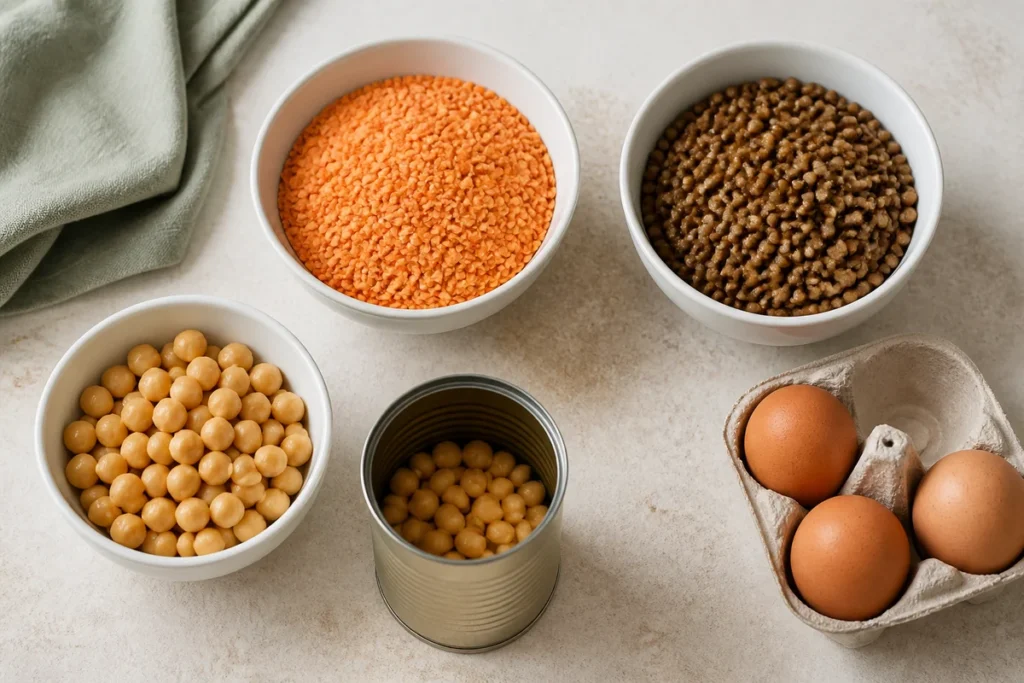
Beans and lentils are a strong starting point when you want inexpensive protein. Plant proteins are generally economical, and pulses also provide fibre. Plain tofu, eggs, milk, yoghurt and tinned fish give you other options, depending on prices and what you eat. There’s no single winner for every shop or household.
Dried or tinned pulses
Dried pulses can be good value when you regularly cook them and use the whole pack. Tinned pulses are already cooked, making them convenient for a quick lunch or for adding to a sauce. That convenience may be worth paying for if cooking dried beans would make the meal impractical.
Follow the packet’s preparation and cooking instructions for dried pulses. Don’t assume they can be substituted directly for cooked beans in a recipe.
Try lentils in a tomato sauce, chickpeas in a curry or beans in a soup. Start with one meal you already like, rather than buying several unfamiliar ingredients and hoping dinner works out.
Compare what reaches your plate
Comparing a kilogram of dried lentils with a kilogram of tinned lentils is misleading: dried lentils take up water during cooking, while a tin’s total weight includes liquid you might discard.
Compare the cost of the cooked portion you’ll actually eat. Use drained weight for tinned foods when the liquid is discarded, and include cooking costs where they could change the decision. If you specifically want to compare cost per gram of protein, use nutrition figures for the same state: dried, cooked or drained. A cheap packet and a cheap serving aren’t necessarily the same thing.
If that level of comparison feels like too much work, start by trying pulses in one familiar meal.
Get more fruit and vegetables for your money
Use several formats so you’re not relying on all your fresh produce lasting until the next shop. The NHS five-a-day guidance counts fresh, frozen and tinned fruit and vegetables. An adult portion is generally 80g. Beans and pulses count as a maximum of one portion a day, however many types you eat; ordinary potatoes count as starch, not one of your five.
Buy for the meals you actually eat
Plan where the produce will go. A cabbage might work as a side dish and in a stir-fry; carrots can go with lunch and into soup. If you only enjoy berries at breakfast, a frozen bag may suit you better than several fresh punnets.
Seasonal offers and “wonky” produce can be worth checking, but compare the actual price. An unusual shape doesn’t make a vegetable less nutritious. You don’t have to buy the same fruit every week: choose an affordable alternative you like when your usual choice is expensive.
Add vegetables to meals you already make: peas with pasta, tinned tomatoes in a sauce or spinach in a curry. Buy a manageable amount of variety instead of a large selection with no plan.
Loose or packaged: compare quantity as well as price
Neither is always cheaper. Loose produce lets you buy the number or weight you need. A bag can have a lower price per kilogram, but only offers better value if you can use it.
For a hypothetical example, suppose loose carrots cost £1 per kilogram and a 1kg bag costs 80p. If you need 300g, buying them loose costs 30p. The bag is cheaper per kilogram, but requires 50p more at the checkout.
If you use the whole bag, it’s good value. If you eat only 300g and discard the rest, you’ve paid 80p for those carrots: an effective £2.67 per kilogram. These figures illustrate the calculation; they aren’t current supermarket prices.
Check the shelf’s unit price, then ask how much you’ll use. For produce priced per item rather than by weight, size matters too. A bag isn’t automatically wasteful, and loose isn’t automatically a bargain.
Choose fresh, frozen or canned to suit the meal
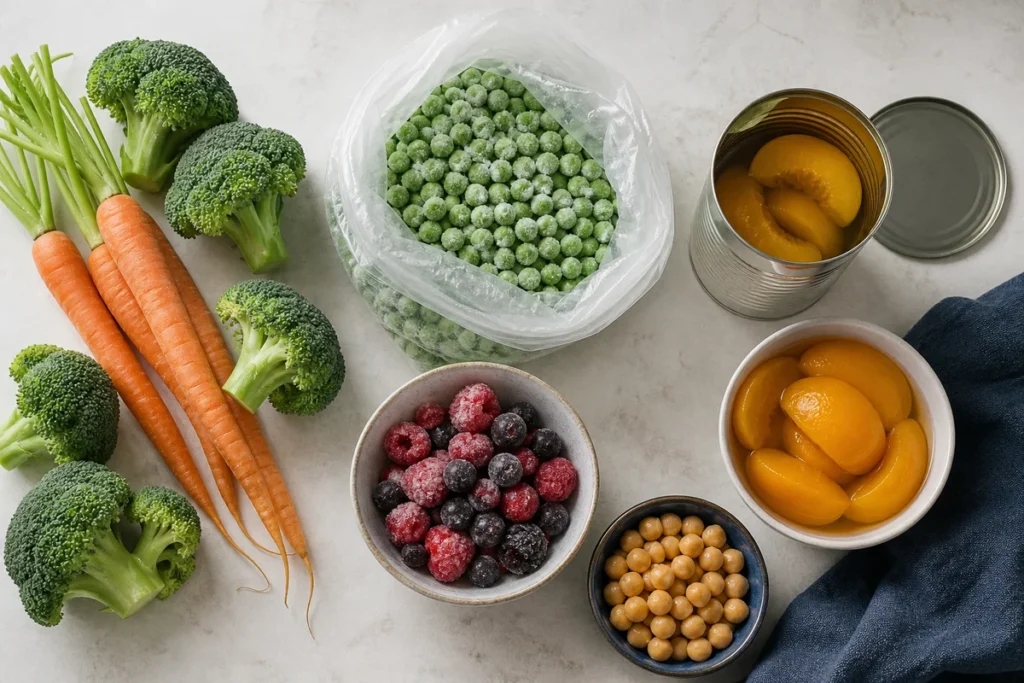
Frozen and canned foods can cost less than fresh, but the answer depends on the food, season, offer and quantity you use. Compare equivalent products and edible portions rather than treating one aisle as the cheapest.
| Format | When it can be useful | What could change the value |
|---|---|---|
| Fresh | Raw snacks, salads and produce you’ll use soon | Seasonal prices, preparation waste and spoilage |
| Frozen | Taking out a small amount for each meal | Freezer space, pack price and cooking instructions |
| Canned or tinned | Cupboard storage and quick meal ingredients | Drained weight, added ingredients and use after opening |
When frozen fruit costs less
Frozen berries and cherries can be cheaper than fresh equivalents, particularly when fresh prices are high. But frozen fruit isn’t necessarily cheaper than a banana or an apple, and a fresh offer may beat the frozen price.
Compare price per kilogram for the same fruit first, then think about use. If you only need a little at a time, being able to portion out a frozen bag can reduce the amount discarded.
Frozen fruit suits porridge, cooked fruit dishes and yoghurt toppings when prepared according to the pack. Check whether it’s ready to eat or needs cooking, and follow the thawing and storage instructions. A frozen label isn’t a promise that every product is ready to serve straight from the bag.
Frozen vegetables are a healthy choice
Plain frozen vegetables can be as nutritious as fresh for everyday eating. Research comparing selected vitamins in fresh, frozen and refrigerated produce found broadly comparable results across many of the comparisons. That doesn’t mean every nutrient is identical: the vegetable, processing, storage and cooking all matter.
Freezing doesn’t turn vegetables into an inferior food. Fresh produce also loses some nutrients during storage and cooking, while processing can reduce certain vitamins in frozen and canned foods. There is no need to insist on fresh-only shopping to eat well.
Choose plain vegetables when you want control over added sauces, salt and fat. Cook frozen vegetables according to the instructions, including when you intend to cool them for a salad. Defrosting alone is not a substitute for required cooking.
Canned food can earn its place
Canning doesn’t automatically make food unhealthy. Tinned vegetables and fruit can contribute to your five a day, and beans can provide protein and fibre. Choose fruit in juice or water rather than syrup, and vegetables or pulses without added salt where available and affordable.
Check the food inside the tin. Plain tomatoes, beans and peaches are different products from a salty prepared meal or a sugary dessert. Comparing labels is more useful than rejecting the whole format.
If you won’t use a whole tin at once, check its after-opening storage instructions before choosing the larger size. Cupboard life before opening doesn’t tell you how long the leftovers will keep.
Spend less on meat and fish
Make a smaller amount of meat go further
You can keep meat in meals while buying less of it. Replace part of the mince in a chilli or Bolognese with cooked lentils or beans, and add vegetables. This can make a smaller purchase cover more portions without simply shrinking dinner.
Compare chicken thighs with breast meat, and bone-in cuts with boneless versions. They can be cheaper to buy, but bones and skin affect how much meat you get. Choose leaner meat where practical, and remove chicken skin if you want to reduce saturated fat.
Look at what you need for the recipe before buying a family pack. An offer only helps if you can use or safely store the extra portions. Cutting the quantity of meat may also make a leaner option affordable.
Compare plain frozen and tinned fish
Check plain frozen fillets and tinned sardines or mackerel against fresh fish. They can offer a lower-cost way to include fish, and tinned fish is convenient because it’s already cooked. Compare edible quantities and check sauces, brine or coatings as well as the price.
Sardines and mackerel are oily fish; canned tuna is a protein option but doesn’t count as oily fish. The NHS fish guidance recommends two portions of fish a week, including one oily portion, and explains the limits that apply to some people. Girls and women who may become pregnant, are pregnant or are breastfeeding should have no more than two oily-fish portions a week. Follow the specific guidance for pregnancy and children when it applies.
Try making tinned fish the main ingredient in a meal with potatoes and vegetables.
Turn a small shopping list into meals
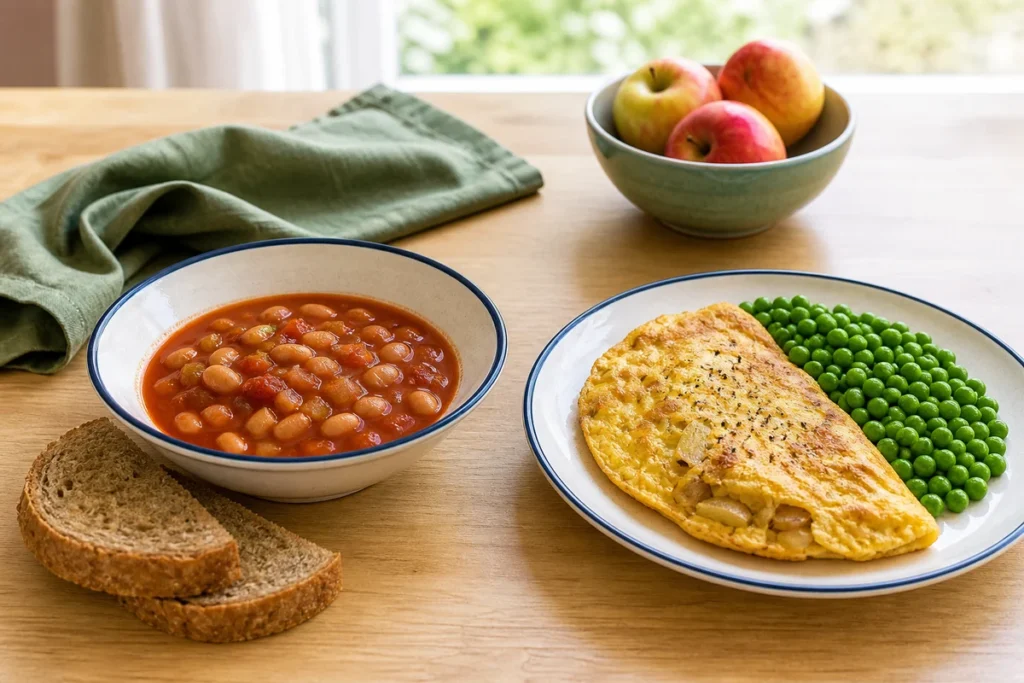
Choose a few meal combinations with overlapping ingredients. These are flexible ideas, rather than a priced or nutritionally analysed meal plan:
- Breakfast: porridge made with milk or a suitable fortified alternative, with banana or prepared frozen fruit.
- Lunch: bean and tomato soup with wholemeal bread.
- Dinner: chickpea and spinach curry with rice.
- Another dinner: a potato and egg dish with peas or other vegetables.
- A fish option: sardine and tomato pasta, with vegetables alongside.
The tomatoes can work in the soup, curry and pasta. Frozen vegetables can cover more than one dinner, and fruit can serve breakfast or a snack. Add the amounts you need, rather than buying every ingredient in the largest available pack.
Our guide to meal planning on a budget explains how to turn those choices into a shopping list that fits your week.
Keep a low-effort option
If you don’t have a freezer, concentrate on tinned ingredients and fresh quantities you can use soon. If cooking time is limited, ready-cooked pulses or a microwaveable component may be worth the extra cost when they make an affordable meal possible.
A useful fallback might be beans on wholemeal toast with a suitable vegetable side, or a tinned-fish sandwich with fruit. Choose something you can actually prepare with the facilities available. “Cook everything from scratch” isn’t helpful advice when you only have a microwave.
Store the extra portions safely
If you cook extra soup or curry, decide when you’ll eat it. The Food Standards Agency’s cooking and leftovers guidance says to cool food and put it in the fridge within two hours, then eat leftovers within 48 hours or freeze them. Food Standards Scotland also advises refrigerating leftovers within two hours and eating them within two days.
Reheat leftovers only once, until steaming hot throughout, and follow any more specific food or label instructions. Preparing extra food saves money only when it becomes another meal.
Make one useful change at your next shop
Start with one meal using beans or lentils, one fruit or vegetable swap that suits your budget, and a list of what’s actually missing from the kitchen. You can build on changes that work without replacing your entire diet.
If there isn’t enough money for adequate food, ask your local council or Citizens Advice about local support. That is a different problem from needing a better shopping list.
Affordable healthy eating is about getting variety from useful ingredients, in quantities you can manage. The plan has to work for your appetite, your kitchen and your week.